
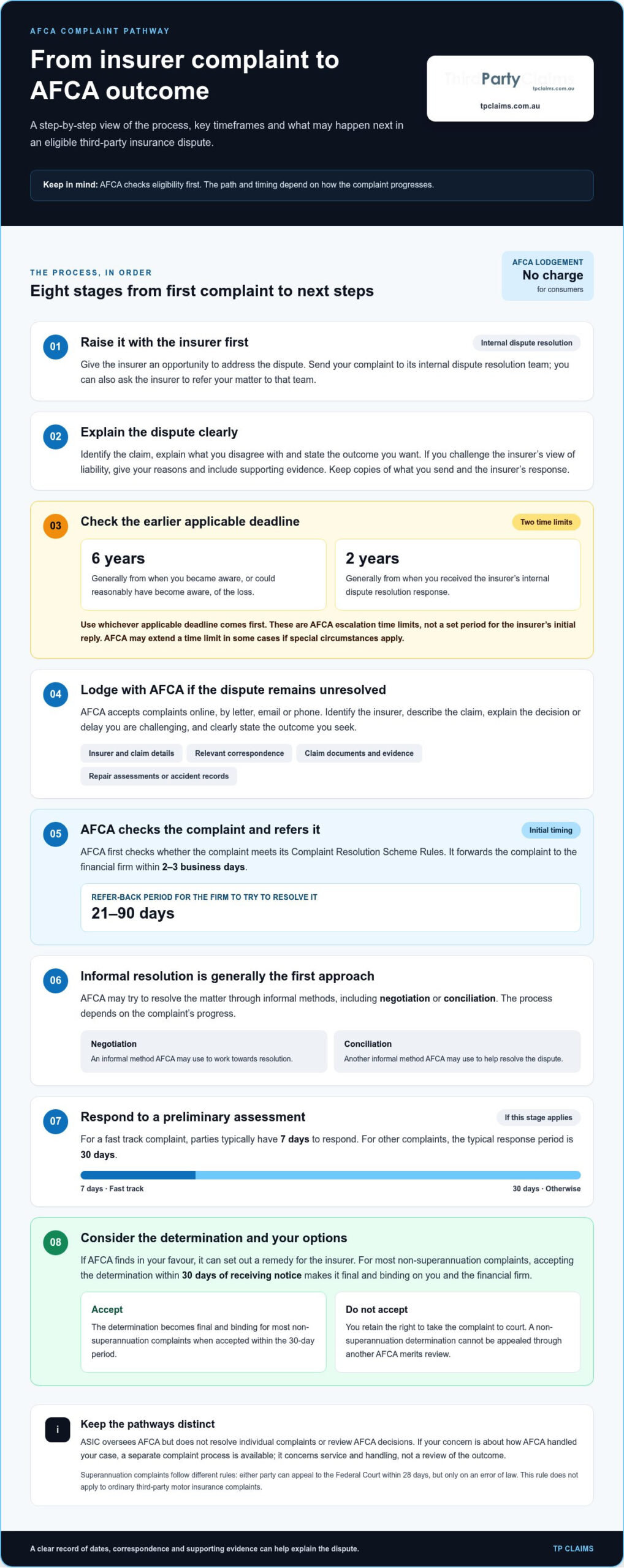
An AFCA complaint can move quickly to the insurer, but the process includes a refer-back period before later resolution steps. If you’re working out how to make a formal complaint against a third-party insurer through AFCA, AFCA forwards it to the financial firm within 2-3 business days and allocates a refer-back period of 21-90 days.
It’s understandable to want a clear end date when an insurer dispute is already putting pressure on you. The timing depends on how the complaint progresses. AFCA generally begins with informal resolution, such as negotiation or conciliation, and may take further steps if the matter remains unresolved.
This guide explains which insurance disputes AFCA can consider, the complaint time limits and what may follow an AFCA decision. You’ll also learn how to prepare a complaint and where TP Claims may help manage the third-party claim and insurer negotiations after a motor vehicle accident.
Key Takeaways
- AFCA’s complaint time limits generally depend on when you became aware of the loss and when you received the insurer’s internal complaint response. The earlier applicable deadline matters.
- AFCA can consider eligible general insurance disputes, including disagreements about car-accident liability, claim decisions, assessed losses and delays.
- For most non-superannuation complaints, you can choose whether to accept AFCA’s determination. Accepting it within 30 days makes it final and binding.
- ASIC oversees AFCA but does not resolve individual complaints or review AFCA decisions. If your concern is about how AFCA handled your case, a separate complaint process is available.
AFCA’s complaint resolution approach
AFCA first checks whether a complaint meets its Complaint Resolution Scheme Rules. Eligible disputes may then proceed through informal resolution or further assessment.
Complaining to the insurer first
Starting with the insurer’s internal complaint process gives it the opportunity to address the dispute. A third party can complain to AFCA about an insurer’s handling of a car accident dispute if it meets AFCA’s eligibility rules. You don’t have to approach AFCA first: you can ask the insurer to refer your matter to its internal dispute resolution team. AFCA does not charge consumers to lodge a complaint.
Formal complaints about third-party claims
A formal complaint should identify the claim, explain what you dispute and state the outcome you want. If you challenge the insurer’s view of liability, for example, set out your reasons and include supporting evidence. Send the complaint to the insurer’s internal dispute resolution team, and keep copies of your submission and its response. These records will help you explain how to make a formal complaint against a third-party insurer through AFCA if the dispute remains unresolved.
Online lodgement and supporting documents
AFCA accepts complaints online, by letter, email or phone. For an online complaint, identify the insurer, describe the claim and explain which decision or delay you are challenging. Attach relevant correspondence, claim documents and evidence, such as repair assessments or accident records. Clearly state the outcome you seek so AFCA can understand the dispute and assess the information provided.
AFCA’s process and timing
After lodgement, AFCA forwards the complaint to the financial firm within 2-3 business days. The firm receives a refer-back period of 21-90 days to try resolving it. AFCA generally begins with informal methods, including negotiation or conciliation. If you’re learning how to make a formal complaint against a third-party insurer through AFCA, expect the process to depend on the complaint’s progress. Parties typically have seven days to respond to a preliminary assessment for a fast track complaint, or 30 days otherwise. The Australian Securities and Investments Commission’s Regulatory Guide 267 sets out how ASIC performs its oversight role in relation to AFCA.
Binding decisions and court options
If AFCA finds in your favour, it can set out a remedy for the insurer to provide. For most non-superannuation complaints, the insurer must comply if you accept AFCA’s determination. You don’t have to accept it, so read the decision carefully before deciding what to do next.
Accepting has a firm deadline: a non-superannuation determination becomes final and binding if you accept it within 30 days of receiving notice. Once accepted, both you and the financial firm are bound by the outcome. If you don’t accept, you retain the right to take the complaint to court instead.
AFCA determinations for non-superannuation complaints can’t be appealed through another AFCA merits review. The court system is the route for challenging a determination. Court proceedings are separate from AFCA’s process, so consider the decision, the outcome you seek and the evidence for your position before choosing that path.
Superannuation complaints follow a different rule. Either party can appeal an AFCA determination to the Federal Court within 28 days, but only on an error of law. That appeal limit applies to superannuation matters, not ordinary insurance complaints about a third-party motor claim.
If you’re unhappy with how AFCA handled your complaint, rather than its decision, you can complain to AFCA and its independent assessor. That process concerns service and handling, not a review of the outcome. AFCA must report to ASIC if a financial firm fails to comply with a determination. If you’re still managing a motor claim alongside a dispute, third-party property damage claim support may help you keep the claim process organised.
Complaint time limits
AFCA’s general complaint deadlines depend on two dates: when you became aware, or could reasonably have become aware, of the loss, and when you received the insurer’s internal complaint response. Use the earlier applicable deadline to plan your lodgement. Waiting for further correspondence could matter if either time limit is approaching.
Generally, you should complain to AFCA within six years after first becoming aware, or reasonably being expected to become aware, of the loss. The starting point is when you became aware of the loss you want AFCA to consider, not simply the date you decided to challenge the insurer. Keep records showing when you noticed the loss and raised it.
A second deadline applies after the insurer responds through its internal dispute resolution process. You should generally complain to AFCA within two years of receiving that response. Save the response and note when it arrived, as that date helps you calculate the escalation window. If the six-year period is also running, compare both deadlines.
AFCA says to use whichever of the two time limits comes first. For example, if the six-year deadline based on when you became aware of the loss falls before the two-year period from the insurer’s response, follow the earlier deadline. Don’t assume a new internal complaint resets the original awareness date. Keep a clear timeline of the loss and complaint correspondence.
How long does an insurer have to respond to a formal complaint in Australia? The AFCA deadlines described here govern when to escalate an unresolved complaint, rather than setting a response period for the insurer’s initial reply. Once you receive the internal dispute response, the general AFCA limit is two years, subject to whichever applicable deadline comes first.
AFCA may extend a complaint time limit in some cases if it considers that special circumstances apply. Don’t rely on a possible extension as a reason to delay. Lodge within the applicable period where you can, and explain the circumstances if a deadline is an issue. A dated timeline, the insurer’s response and records of the loss can help clarify how the dates fit together.
Insurance issues eligible for complaint
AFCA can consider complaints about life insurance and general insurance products. After a motor accident, a third party may complain about disputed liability or an insurer’s handling of the claim. The complaint must fall within AFCA’s Complaint Resolution Scheme Rules, so identify the insurer, product and decision at issue.
For general insurance, complaints can concern more than a rejected claim. AFCA accepts complaints about an insurer’s claim decision, the assessed value of a loss, or delays in making a decision. You can also complain if the insurer applied or calculated a premium incorrectly, failed to follow your instructions, or breached privacy or confidentiality.
Examples of insurance matters AFCA considers include:
- Domestic, travel and ticket, pet, strata title, sickness and accident insurance.
- Medical indemnity, life and small business insurance, including farm insurance.
- A car-accident liability dispute or a disagreement about an insurance excess.
- A travel claim denied because of a pre-existing condition, or a landlord claim denied over whether a tenant caused damage maliciously.
These examples can help you describe the issue clearly. Explain whether you dispute who was liable for a collision, the insurer’s repair-cost assessment, or a delay in deciding the claim. Keep the complaint focused on the insurer’s actions and the outcome you want AFCA to consider.
Some insurance matters fall outside AFCA’s remit. AFCA does not consider private health insurance complaints; the Private Health Insurance Ombudsman considers them instead. AFCA also excludes workers compensation complaints. Identifying the product type first can help you avoid using the wrong complaint process.
If your dispute involves an insurer’s handling of a motor vehicle claim, get help negotiating with an insurer while you organise the facts and supporting records.
TP Claims: Third Party Property Damage Claims
TP Claims helps individuals and businesses manage third-party property damage claims after a motor vehicle accident. If an insurer dispute is part of a wider accident claim, support with the claim process and insurance negotiations can help you keep the practical issues organised while you consider your options.
TP Claims also manages claims involving uninsured drivers when you’re dealing with vehicle damage and the other driver is uninsured. Accident replacement vehicles are available in many cases, subject to conditions, to help with transport while the claim is being managed. These services concern third-party claims after a motor vehicle accident, not personal injury claims or insurance advice.
If you’re considering an AFCA complaint alongside an unresolved motor claim, contact TP Claims to discuss support with managing your claim.
Choose your next step with confidence
Knowing how to make a formal complaint against a third-party insurer through AFCA gives you a way to challenge an insurer’s handling of a dispute. Keep the complaint process and the practical work of resolving vehicle damage clear and organised. State the outcome you want, keep your records together, and consider whether you also need support with the underlying claim.
TP Claims works with people managing third-party motor vehicle claims and insurer negotiations. If you’re handling an insurer dispute alongside repairs or other claim matters, practical claims support can help you focus on the steps ahead. It’s separate from AFCA’s role in considering an eligible complaint.
For help with your motor vehicle claim, contact TP Claims. Take the next step with a clearer plan and support focused on your claim.
Frequently Asked Questions
How long will it take for my complaint to be finalised?
There isn’t one fixed timeframe for every AFCA complaint. A matter may resolve through informal discussions or proceed to assessment if the insurer and complainant don’t agree. Response periods AFCA sets at particular stages are deadlines for the parties, not a guaranteed finish date. Keep documents organised and respond promptly to requests, as delays in providing information can affect progress.
How soon should I make a complaint to AFCA after I have become aware of an issue?
Generally, lodge within six years of first becoming aware, or reasonably being expected to become aware, of the loss. The relevant date may not be the day of the accident if you discovered the loss later. Keep a dated record of when you identified the problem and first raised it with the insurer, so you can explain the timeline.
Where can I get more information?
AFCA’s complaint information explains eligibility, lodgement and how its process works. For a question about whether a particular insurer dispute fits the scheme, review AFCA’s Complaint Resolution Scheme Rules. If your concern is dissatisfaction with AFCA’s handling rather than its decision, ASIC’s Information Sheet 176 explains options relating to an AFCA decision.
What is the time limit for lodging a third-party insurance complaint with AFCA?
For a third-party insurance dispute, the general limit is six years from when you became aware, or could reasonably have become aware, of the loss. If you received the insurer’s internal dispute response, a two-year limit generally applies from the date you received it. AFCA says to use whichever limit comes first, so compare the date you became aware of the loss with the response date.
Can I take an insurer to court while an AFCA complaint is underway?
Don’t assume you can pursue both routes at once. For a non-superannuation complaint, you can retain the right to take the matter to court if you don’t accept AFCA’s determination. That does not establish that court proceedings can run alongside an open AFCA complaint. Before starting court action, get legal advice about how it may affect your complaint and deadlines.