
A disputed repair bill doesn’t automatically end your options. The AFCA dispute process for a third-party property damage motor claim can address complaints about an insurer’s claim decision, including a denied claim, the value of an assessed loss or a delay in deciding the claim. AFCA can also consider disputes about liability for a car accident or an insurance excess.
If you’re caught between an insurer’s assessment and what you believe the damage should cost, it can be hard to know what AFCA can review. This guide explains which insurance complaints AFCA may consider and how disputes about decisions, assessed losses and delays fit into the process.
You’ll also learn how liability and excess disputes may be raised, and what to understand before taking the next step. The aim is to make the process clearer, so you can focus on the issue that needs resolving.
Key Takeaways
- Identify the insurer’s decision or action you disagree with, then organise the records that show what happened and why you dispute it.
- Whether you can lodge a complaint depends on your connection to the claim and the issue you want reviewed.
- Understand the relevant time limits before lodging, and note how the date and history of your complaint may affect the next step.
- AFCA’s process can move through assessment, negotiation and determination; knowing what each stage involves can help you prepare.
Complaints about claim decisions, assessed losses and delays
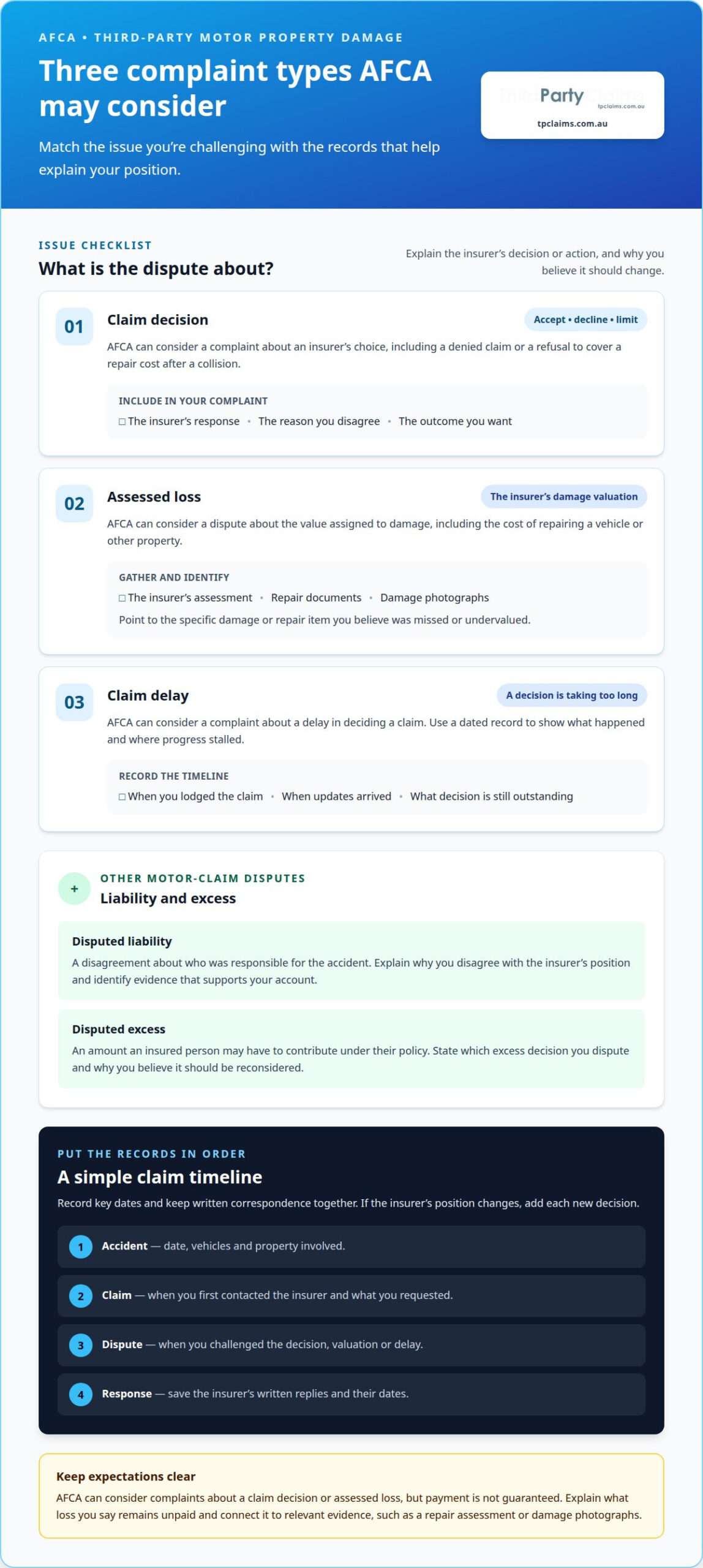
A claim decision is an insurer’s choice to accept, decline or limit an insurance claim. AFCA can consider complaints about an insurer’s decision, including a denied claim. For example, you might dispute an insurer’s refusal to cover a repair cost after a collision. The AFCA dispute process for a third-party property damage motor claim gives you a way to raise that disagreement. Explain which decision you’re challenging and why you believe it should change.
An assessed loss is the value an insurer assigns to damage covered by a claim. AFCA can consider complaints about that valuation, including disputes over the cost of repairing a damaged vehicle or property. Gather the insurer’s assessment, repair documents and photographs. Then identify the specific damage or repair item you believe was missed or undervalued. In the AFCA dispute process for a third-party property damage motor claim, specific examples help clarify the disagreement.
A claim delay complaint is about an insurer taking too long to make a decision. AFCA can consider complaints about delays in deciding a claim. Keep a record of key steps, such as when you lodged the claim and received updates. A clear timeline helps show where progress stalled and what decision is still outstanding.
Compensation for third-party vehicle or property damage depends on the claim issue being reviewed. AFCA can consider complaints about an insurer’s claim decision and the value of an assessed loss, but payment is not guaranteed. Explain what loss you say remains unpaid and connect it to evidence, such as a repair assessment or damage photographs.
- Decision: include the insurer’s response and the reason you disagree.
- Valuation: identify specific repair or property items you believe were missed.
- Delay: provide a dated timeline of claim events and follow-ups.
AFCA can consider complaints about life and general insurance products in Australia, including domestic car insurance. Keep your documents together and state the outcome you want. If you disagree with a denial, valuation or delay, describe the issue directly and support it with relevant claim records.
Who can lodge an AFCA complaint about a third-party property damage motor claim?
A complainant is the person asking AFCA to review an insurance dispute. In a motor accident matter, that may be someone challenging an insurer’s position on who was responsible or whether an excess applies. Start by identifying your connection to the accident and the decision you want reviewed. For example, explain whether you were the driver, vehicle owner or person facing a claim for damage.
A liability dispute is a disagreement about who was responsible for a car accident. A person in Australia can complain to AFCA about disputed liability for a car accident. If the insurer says you caused the collision, explain why you disagree and identify the evidence supporting your account. If you’re seeking payment for damage, describe how the insurer’s liability decision affects your claim.
An insurance excess is an amount an insured person may have to contribute under their policy when making a claim. A person can complain to AFCA about a disputed insurance excess. For example, you might challenge an insurer’s decision to apply an excess after a collision. State which excess decision you dispute and why you believe it should be reconsidered.
A third-party property damage claim concerns damage to someone else’s property, such as a vehicle, in a motor accident. Before lodging a complaint, write a short summary naming the people involved, the insurer and the decision in dispute. Keep your account focused on the issue AFCA is being asked to consider. Separate your view of the accident from the specific insurer decision you’re challenging.
Gather documents that relate directly to that issue, such as the insurer’s correspondence, accident details and photographs of vehicle damage. A clear timeline can help explain when the dispute arose and how it developed. If you’re unsure how to organise a property damage claim, third-party damage claim support may help you manage the claim outside AFCA’s complaint process.
What are AFCA’s time limits for third-party motor property damage complaints?
A complaint time limit is the period available to take a dispute to AFCA. The applicable deadline depends on the complaint and its history, so don’t assume the crash date alone tells you when to act. Record the key dates before preparing your complaint.
Start with a simple timeline. Note when the accident happened, when you lodged or raised the property damage claim, and when the insurer made its decision. Add the date of any later response about liability, an assessed loss or an excess. These dates help show how the dispute developed and which decision you’re challenging.
Next, identify whether the insurer has responded to your complaint. Internal dispute resolution is the insurer’s process for handling a complaint directly. If you prefer not to complain to AFCA directly, you can ask the financial firm to make a complaint to its internal dispute resolution team. Keep the complaint and response dates together, including any written acknowledgement or decision.
Use this checklist to organise the timeline:
- Accident: record the date and the vehicles or property involved.
- Claim: note when you first contacted the insurer and what you requested.
- Dispute: record when you challenged the decision, valuation or delay.
- Response: save the insurer’s written replies and dates.
If the insurer’s position changes, add each new decision to your record. For example, distinguish an initial liability decision from a later repair assessment. This helps explain whether your complaint concerns one decision or several related issues.
Prepare your AFCA complaint promptly once you understand the issue and have gathered the relevant correspondence. List the dates in order and attach the messages or documents that support them. If you’re unsure which deadline applies to your circumstances, contact AFCA directly before relying on a date calculation. A complete timeline gives AFCA a clearer account of the complaint and keeps the focus on the disputed motor property damage issue.
What happens during AFCA’s complaint assessment, negotiation and determination stages?
Assessment is AFCA’s initial review of a complaint and the information provided. AFCA needs to understand the issue, the people involved and the outcome you’re seeking. Make your complaint specific: for example, say whether you dispute an insurer’s liability decision, repair assessment or delay. Attach relevant correspondence and explain how each document supports your position.
AFCA may ask for further information while considering the complaint. Respond clearly to each request and keep copies of what you send. If the insurer’s account differs from yours, identify the exact point of disagreement. For a repair valuation dispute, distinguish the items you challenge from those you accept.
Negotiation is an attempt to resolve a dispute through discussion between the parties. Keep your proposed outcome practical and tied to the issue. For example, explain which parts of a vehicle damage assessment you want reconsidered, and why. If a new offer or explanation arrives, compare it with your original complaint and supporting documents.
Determination is AFCA’s decision on a complaint that has not been resolved through earlier handling. Prepare by setting out the facts in date order, separating evidence from opinion, and stating the outcome you seek. If you’re asked to respond to the insurer’s material, address its specific points and provide relevant records. An unresolved disagreement does not guarantee a particular result.
Throughout these stages, keep one organised file containing your complaint, the insurer’s replies, damage evidence and AFCA correspondence. Use consistent dates and names so each document is easy to match to the events. This can help you explain a disputed assessment or liability position without introducing unrelated issues.
If insurer negotiations over a motor property damage claim are becoming difficult to manage, get support with insurance negotiations.
TP Claims: Third Party Property Damage Claims
TP Claims manages third-party motor property damage claims and can help progress your claim and handle insurer negotiations. Where applicable, its claims management service is offered on a No Win, No Fee basis, helping keep the process and correspondence organised.
If you’re an uninsured driver dealing with a property damage claim, TP Claims also manages claims for uninsured drivers. This can help when the dispute involves vehicle damage, liability discussions or ongoing insurer negotiations. AFCA and claims management have different roles: AFCA considers eligible complaints, while TP Claims helps manage third-party claims.
Contact TP Claims or visit tpclaims.com.au to discuss your third-party property damage claim.
Choose your next step with confidence
Understanding the AFCA dispute process for a third-party property damage motor claim can help you decide whether to lodge a complaint or get support managing the claim. The right next step depends on what you need: AFCA considers eligible complaints, while claims assistance can help with the claim itself and insurer discussions.
TP Claims offers Third Party Property Damage Claims, Insurance Negotiation Services and Claims Management for Uninsured Drivers. If you’re dealing with a property damage claim and want help moving it forward, speak with TP Claims about support for your situation.
Contact TP Claims for help with your third-party motor property damage claim. A clear next step can make a complicated process easier to manage.
Frequently Asked Questions
What is AFCA’s role in third-party motor property damage disputes in Australia?
AFCA considers eligible complaints about financial firms, including complaints about general insurance and domestic car insurance. In a motor property damage dispute, it may review a disagreement about an insurer’s handling of a claim. For example, you can raise concerns about how an insurer assessed responsibility for a collision. AFCA’s role is separate from managing repairs or negotiating directly with the insurer.
Must you complain to the insurer before taking a motor claim dispute to AFCA?
You can complain to AFCA directly, or ask the financial firm to refer your complaint to its internal dispute resolution team. This gives the insurer an opportunity to address the issue through its own complaint process. Keep the complaint and any response together so you can explain what you raised and whether the insurer’s reply resolved your concern.
How do you lodge an AFCA complaint and what evidence is required?
You can lodge an AFCA complaint online, by letter, email or phone. Explain the outcome you want and connect it to the motor claim issue. Supporting material could include repair invoices, an assessor’s report, claim communications and records showing the vehicle’s condition before repairs. These documents help distinguish a disagreement about repair work from one about responsibility for the accident.
Are there limits on AFCA’s jurisdiction or monetary awards for motor claims?
AFCA can consider complaints about general insurance, including domestic car insurance, but its remit does not cover every insurance product or dispute. For example, it does not consider private health insurance or workers compensation complaints. The amount claimed alone does not determine whether a complaint falls within AFCA’s remit. The type of insurance and the issue in dispute also matter.
Can AFCA review an insurer’s decision on liability, repair costs or vehicle valuation?
AFCA can consider complaints about disputed liability for a car accident, an insurance excess or the value of an assessed loss. For instance, you could challenge an insurer’s view about who caused a collision or dispute its valuation of the damage. Make clear which decision you want reviewed, especially if liability and repair costs are separate concerns in the same claim.
What compensation can AFCA award for third-party vehicle or property damage?
AFCA can consider complaints about an insurer’s claim decision and the value of an assessed loss, but compensation is not guaranteed. Explain what unpaid loss remains and support your position with evidence such as a repair assessment or damage photographs.