
Your car has been hit, your child’s seat looks fine, and you’re wondering who pays for child car seat replacement after crash australia. It’s a stressful question, especially when you need to keep your child safely restrained and aren’t sure whether to approach your insurer or the other driver’s.
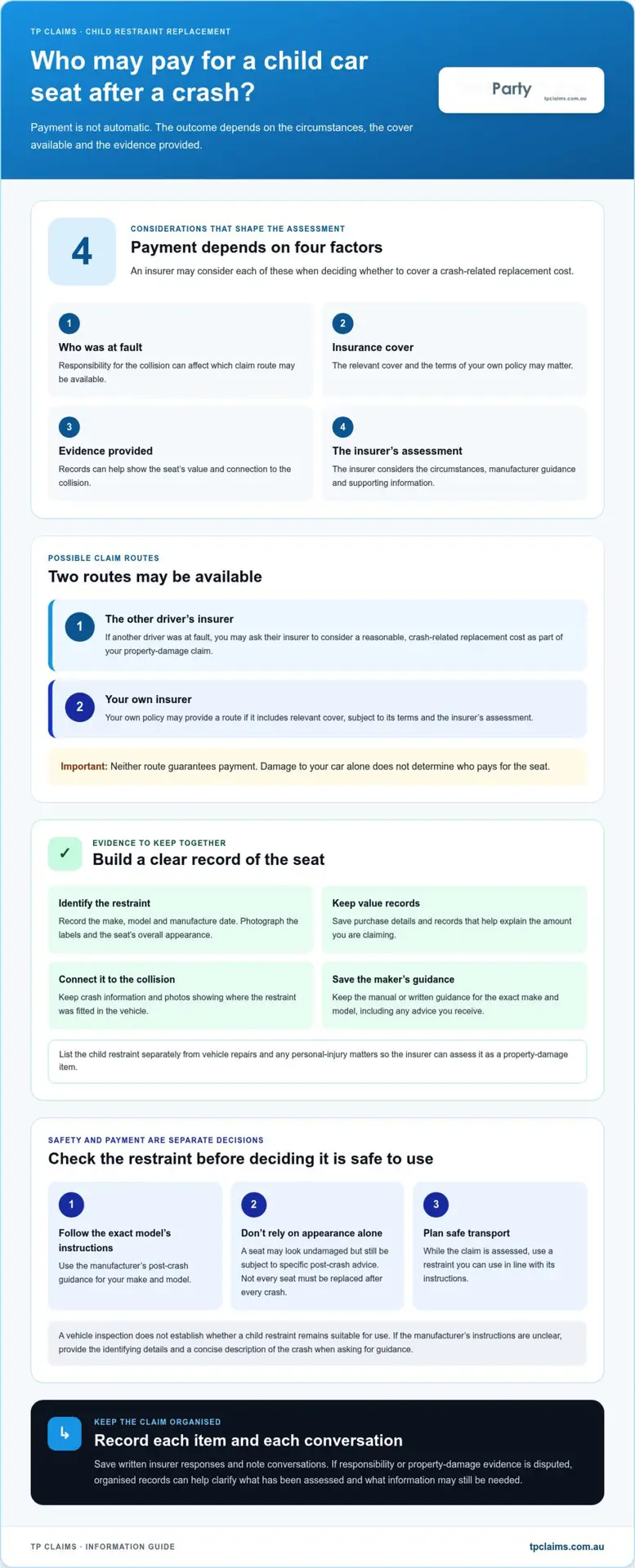
It’s understandable to expect the at-fault driver’s insurer to cover the replacement, but payment isn’t automatic. The outcome can depend on who was at fault, the insurance cover involved, the evidence you provide and the seat manufacturer’s crash guidance. A seat may also have damage you can’t see, so check the manufacturer’s instructions before using it again.
This guide explains when a seat may need replacing, which claim routes may be available and what records can support your request. It also covers how to document the seat’s value and connection to the crash, and how to plan safe transport while the claim is assessed. If an insurer disputes responsibility or your property-damage evidence, claims management support can help with negotiations.
Key Takeaways
- To work out who pays for child car seat replacement after crash australia, identify who was at fault and consider the relevant insurance and manufacturer options.
- Check the instructions for your exact restraint. A seat may need attention even when you can’t see damage.
- Keep photos, purchase details, crash information and the manufacturer’s guidance together to support your claim.
- Plan safe transport for your child while the claim is assessed, and keep a clear record of your communication with the insurer.
- If responsibility or evidence is disputed, organised records and third-party property-damage claims support may help move negotiations forward.
Who pays to replace a child car seat after a crash in Australia?
Payment depends on who was at fault, the insurance cover available, the evidence provided and how the claim is assessed. If another driver was at fault, you may ask their insurer to consider a reasonable crash-related child restraint replacement cost as part of your property-damage claim. If your own policy provides relevant cover, that may be another route, subject to its terms and the insurer’s assessment.
Neither route guarantees payment. An insurer may consider the crash circumstances, whether the manufacturer’s guidance says the seat should be replaced, and the evidence for its value and involvement in the collision. The damage to your car alone won’t determine who pays for the seat.
Describe the seat separately from other parts of the incident. It’s a property-damage item, distinct from vehicle repairs and any personal-injury matters. If your claim covers both a damaged vehicle and a child restraint, list each item clearly so the insurer can assess the seat’s replacement cost using its own evidence.
When can replacement be part of a property-damage claim?
If the restraint was damaged in the collision, or the manufacturer’s post-crash instructions say it shouldn’t be used, you can include its replacement in your property-damage request. Provide details that connect the seat to the crash, such as photos showing where it was fitted in the vehicle and purchase records. These help explain what was affected and how you arrived at the amount claimed.
Responsibility depends on fault, applicable cover, evidence and the insurer’s assessment. Record the seat separately from vehicle damage rather than assuming its cost will be included automatically.
Why the safety decision is separate from who pays
First, check the instructions for your exact restraint and follow the manufacturer’s advice about crash involvement and replacement. A seat may look undamaged but still be subject to specific post-crash guidance. At the same time, don’t assume every seat must be replaced after every crash. The relevant advice can depend on the manufacturer’s criteria and the circumstances.
The safety decision doesn’t settle who will cover the cost. You may need to follow the manufacturer’s instructions before an insurer assesses your claim. Keep the guidance and related records to support your request. For general background on child restraints, see Child safety seat.
While the claim is being considered, plan how to transport your child safely using a restraint you can use in line with its instructions. Keep notes of conversations and save written responses from the insurer. If the insurer disputes responsibility or the evidence, a clear record can help you understand what has been assessed and what information may still be needed.
When should a child car seat be replaced after a crash?
There isn’t one answer for every restraint and collision. Start with the instructions for the exact make and model, and follow the manufacturer’s guidance on crash involvement, continued use and replacement. Advice may depend on the type of crash and the maker’s stated criteria, so don’t rely on a general rule or another family’s experience.
A vehicle inspection and a restraint decision are separate matters. A repairer’s assessment of the car doesn’t establish whether the child seat remains suitable for use. Likewise, a seat that appears intact hasn’t necessarily been assessed under its manufacturer’s post-crash instructions. If the instructions are unclear, contact the manufacturer with the restraint’s identifying details and a concise description of the crash.
What should you check on the restraint?
Before disposing of or replacing a seat, record the details that identify it. Photograph its labels and overall appearance, and note the make, model and manufacture date. Keep the manual if you have it. If you don’t, use those exact details to find the manufacturer’s instructions rather than relying on advice for a similar-looking seat.
Note any visible changes, but don’t make a safety decision based only on appearance or an informal inspection. Avoid dismantling or testing the restraint unless the manufacturer’s instructions tell you to. Recording these details helps the manufacturer provide guidance for the right model and preserves useful information for your claim.
What if the seat looks undamaged?
No obvious marks can be reassuring, but they don’t establish whether the seat is suitable for use after a crash. Follow the maker’s stated guidance, even if the seat looks unchanged. Record what happened, including the date and a brief description of the collision, and provide those details with the model information if you need clarification.
Don’t substitute a hands-on check of straps, fittings or internal components for the manufacturer’s advice. If the maker’s instructions set conditions for assessing crash involvement, apply those conditions as written. Keep a copy of any guidance you receive. It may help explain why you stopped using the restraint or included its replacement in a property-damage claim.
Australia has national child-restraint standards and best-practice guidance, but a standard for a seat’s manufacture or use isn’t a substitute for its specific post-crash instructions. Requirements and official guidance may also depend on the question and relevant jurisdiction. Check current official information before relying on a state- or territory-specific rule, and don’t infer crash-replacement advice from a general road rule.
After following the manufacturer’s guidance, keep the seat details and any written response with your crash records. If replacement becomes part of a disputed third-party property-damage claim, support with property-damage claims can help manage the claim and insurer negotiations.
Which insurer may pay for child car seat replacement?
The claim route depends on the crash, who was at fault, the insurance in place and the evidence supporting replacement. If you’re asking who pays for child car seat replacement after crash australia, distinguish a possible claim against the at-fault driver from a claim under your own policy. Neither guarantees payment. Policy wording, any excess, liability and the insurer’s assessment can all affect the outcome.
This comparison shows the main routes to consider. It’s a starting point, not a decision about what your policy covers.
| Possible route | What may affect assessment |
|---|---|
| At-fault party’s insurer | Whether responsibility is accepted or disputed, and evidence connecting the crash to the restraint and its requested replacement. |
| Your own insurer | Your policy wording, whether the incident and seat fall within the cover, any applicable excess and the insurer’s claim process. |
| Uninsured at-fault driver | Evidence about responsibility and loss, and whether you pursue the driver directly or have a relevant route under your own policy. |
For broader context on preparing a vehicle property-damage claim, see this third-party property damage claim guide. You can include the restraint as an item of property damage, but describe and support it separately from vehicle repairs.
If the other driver is insured
You may submit a claim for the restraint to the at-fault party’s insurer, whether responsibility has been accepted or is still being discussed. The insurer may request crash details, photographs, purchase information and the manufacturer’s guidance supporting replacement. Keep copies together and explain how the seat was involved. The insurer assesses the circumstances and evidence, so submitting a request doesn’t mean the cost will automatically be accepted or paid.
If the at-fault driver is uninsured or liability is disputed
An uninsured driver doesn’t have an insurer for you to claim against. Depending on the circumstances, you may need to pursue the driver directly or consider whether your own policy provides a relevant option. If fault is disputed, keep the discussion focused on the available evidence and ask for the insurer’s position in writing. Don’t assume recovery is assured through either route. This not-at-fault accident rights guide provides related property-damage context.
If the seat is one part of a wider vehicle-damage claim, organised records can make the issue easier to assess. TP Claims manages third-party property-damage claims and insurer negotiations, including claims involving uninsured drivers. This support can help if responsibility or the evidence for replacing the restraint is disputed.
How to document and claim a replacement child car seat
A clear record can help explain why you’re seeking a replacement and how the seat was involved in the crash. First, make sure your child can travel safely in a restraint suitable for use. Follow the manufacturer’s post-crash instructions, and don’t keep using a seat if those instructions say it shouldn’t be used.
Then work through these steps:
- Document the seat. Photograph it in the vehicle, its labels and any visible damage. Note the make, model and manufacture date before moving or disposing of it.
- Gather purchase details. Find the receipt or other records that may help show the seat’s value, such as an order confirmation. Keep the manual or the manufacturer’s instructions for that exact model.
- Record the crash information. Save the date, location, claim reference and details of the other driver, along with relevant photographs and any available crash documents.
- Notify the relevant insurer. Explain that you’re seeking assessment of the restraint’s replacement as part of the property-damage claim. Ask what evidence and next steps apply to your claim.
A useful evidence bundle may include crash details, clear seat photographs, purchase records and the manufacturer’s written guidance. Evidence requests vary, so this is a practical starting point, not a guarantee that every claim needs the same documents.
Evidence that can help explain the replacement request
If it’s safe and practical, take clear photos before moving the seat. Include identifying labels and any visible changes, but don’t treat photographs as a safety assessment. Keep the receipt or other purchase information, manufacturer’s guidance and related communications together. Retain the restraint until the insurer or relevant party explains what evidence is needed, while following the maker’s safety instructions.
How to communicate with the insurer
Keep your explanation brief and factual. Describe when the crash happened, where the seat was fitted and why you’re requesting replacement. Refer to the manufacturer’s instructions where relevant. Ask the insurer to set out its evidence requirements and next steps for your claim. Don’t assume another claim’s process or timing will apply to yours.
Keep dated call notes and save emails, claim references and written decisions. If you speak by phone, record who you spoke with and what they said, then keep that note with your documents. This makes it easier to follow up or respond if the insurer asks for more information.
If you’re working out who pays for child car seat replacement after crash australia, organised records can clarify your request without guaranteeing an outcome. If a third-party property-damage claim stalls over responsibility or evidence, get support with your property-damage claim and insurer negotiations through TP Claims.
Getting help if the child seat replacement claim stalls
A delayed or disputed decision can leave you unsure what to do next. Ask the insurer to explain its position in writing. If it says information is missing, ask which documents it needs and why. If it declines the request, ask for its reasons and the evidence considered. A clear timeline of your communications can show what has happened and where the issue remains unresolved.
Keep the discussion focused on the child restraint as property damage. For example, if the insurer accepts that a crash occurred but questions whether the seat needs replacing, put the manufacturer’s guidance alongside the insurer’s written response. If the dispute is about responsibility, keep the crash records and correspondence together so the issue is clear.
When claims management may reduce the admin burden
TP Claims manages third-party motor vehicle property-damage claims and insurer negotiations for not-at-fault drivers, including claims involving uninsured drivers. When a seat replacement is part of a wider vehicle-damage claim, claims management can help organise supporting evidence and manage communications about the disputed property damage. The service is for property-damage claims, not personal-injury matters or insurance advice, and it doesn’t guarantee a settlement, timeframe or particular replacement-cost outcome.
Before following up, bring your records together. A short timeline is useful if different people have discussed the claim or the insurer’s position has changed. Note the date of each conversation, what was requested or decided, and any follow-up action. Keep the original emails and letters as well as your call notes.
Prepare these details where available:
- Crash date and circumstances, details of the other driver and any claim reference.
- Insurer correspondence, including requests for information, decisions and written reasons.
- Seat make, model and identifying details, plus photographs and purchase evidence.
- The restraint manufacturer’s post-crash instructions and any written communication about the seat’s involvement.
You don’t need to resolve every gap before seeking claims support. If a document is missing, note that and explain what you’ve already tried to obtain. Being clear about what you have helps keep the information organised and makes it easier to identify what still needs attention. Keep the damaged restraint until the insurer or relevant party has explained its evidence requirements, while following the manufacturer’s safety instructions.
What to have ready before seeking claims support
Gather the crash details, insurer correspondence and claim reference, then add the seat’s identifying information, purchase evidence and manufacturer guidance if you have them. This gives a claims manager a useful picture of the incident and replacement request. TP Claims manages claims on a no-win-no-fee basis, with support focused on third-party property-damage claims and related insurer negotiations.
If you’re still weighing up who pays for child car seat replacement after crash australia and the property-damage claim has stalled, get help managing a third-party property-damage claim. Bring your records together to discuss support for the claim without assuming the insurer’s decision in advance.
Take the next step with confidence
Uncertainty about who pays for child car seat replacement after crash australia can linger while a property-damage claim is assessed. Keep your records in order and focus on getting a clear response about what remains unresolved.
If the replacement cost is part of a wider third-party property-damage claim, TP Claims can manage the claim and insurer negotiations on a no-win-no-fee basis. This can reduce the administrative pressure while the property-damage issues are addressed.
Get help managing your third-party property-damage claim and take a practical next step towards resolving the dispute.
Frequently Asked Questions
Does a child car seat need replacing after every crash?
Not necessarily. There isn’t one rule for every restraint and crash. Check the exact model’s post-crash instructions and relevant current official guidance. Visible damage alone may not determine whether the seat can be used again. Note the model and what happened, including the type of incident, so you can refer to specific details. If the manufacturer says the seat shouldn’t be used, keep it out of use.
Can a car seat be reused if there is no visible damage?
Don’t decide whether to reuse a seat by appearance alone. The manufacturer’s instructions for that exact model are the practical starting point, alongside applicable current guidance. Record the seat’s identifying details and what happened in the crash. A photo of an intact exterior can document its condition, but it can’t replace the maker’s guidance or establish that the restraint is suitable for continued use.
Will the at-fault driver’s insurer pay for a replacement child seat?
The replacement may be considered as part of a property-damage claim if the crash, responsibility and supporting evidence justify the request, but payment isn’t automatic. The insurer assesses the circumstances and may ask why replacement is sought and how the seat was involved. Keep the model details, relevant replacement information and crash records together. There’s no universal outcome or guaranteed amount across Australian claims.
What if the at-fault driver has no insurance?
If the at-fault driver is uninsured, there’s no insurer of theirs to approach. Depending on the circumstances, you may consider pursuing the driver or whether your own policy offers a relevant pathway. The options depend on the facts, policy terms and liability position, and recovery isn’t assured. Keep written correspondence and claim records together. Third-party property-damage claims support can help organise the claim and insurer communications where relevant.
Can I claim a child seat replacement through my own car insurance?
Possibly. It depends on your policy wording, insured events, excess and the circumstances of the crash. Review your policy documents and ask your insurer how to lodge and document the request. TP Claims manages property-damage claims and insurer negotiations. If you also pursue another route, don’t assume both will pay the same costs. Ask how any overlapping claim will be handled.
What evidence should I keep for a child car seat replacement claim?
Keep the restraint’s make, model and identifying details, photographs, crash information, purchase records, manufacturer instructions and insurer correspondence. A receipt can help show value, but other purchase information may also be useful if it’s unavailable. The insurer may request different material depending on the claim. Where practical, retain the seat until evidence requirements are clear, and follow the manufacturer’s directions about whether it can remain in use.
Can I use a borrowed or hired car seat while my claim is assessed?
You can consider a temporary seat, but it must suit your child and vehicle and be installed according to its instructions. Don’t assume the cost of borrowing or hiring a restraint will be reimbursed. Keep any receipts and ask the relevant insurer how those expenses will be assessed in your claim. If you’re unsure about fit or installation, refer to current official child-restraint guidance before travelling.