
If you weren’t at fault, the at-fault driver or their insurer is generally responsible for your vehicle damage. Disputing repair quality after a not-at-fault car accident starts with documenting the problem and raising it with the insurer or party responsible for the repairs. If your insurer chose and authorised the repairer, complain to your insurer and ask it to address poor workmanship.
A repair that looks wrong, uses parts you didn’t expect or keeps you off the road can add stress to an already difficult situation. You’re entitled to clear answers about who should put things right and how to make your concerns count.
This guide explains who may pay for repairs and how to challenge workmanship, unsuitable parts, delays, repairers and repair methods. You’ll learn what evidence to gather, how to make a complaint and what steps to take if the issue isn’t resolved. It also explains where third-party claims support can help manage the process.
Key Takeaways
- The at-fault driver or their insurer is generally responsible for your vehicle damage, but who arranged the repairs affects how you raise workmanship concerns.
- Document defects with clear photos and consider getting an independent mechanic’s or repairer’s written opinion to support your complaint.
- Raise repair quality, parts or delay concerns with the responsible insurer in writing and keep a record of its response.
- Check repairs against the agreed plan, including paintwork and safety systems, and ask how any sensors were fitted and calibrated.
Claiming repairs through your insurer or the at-fault driver’s insurer
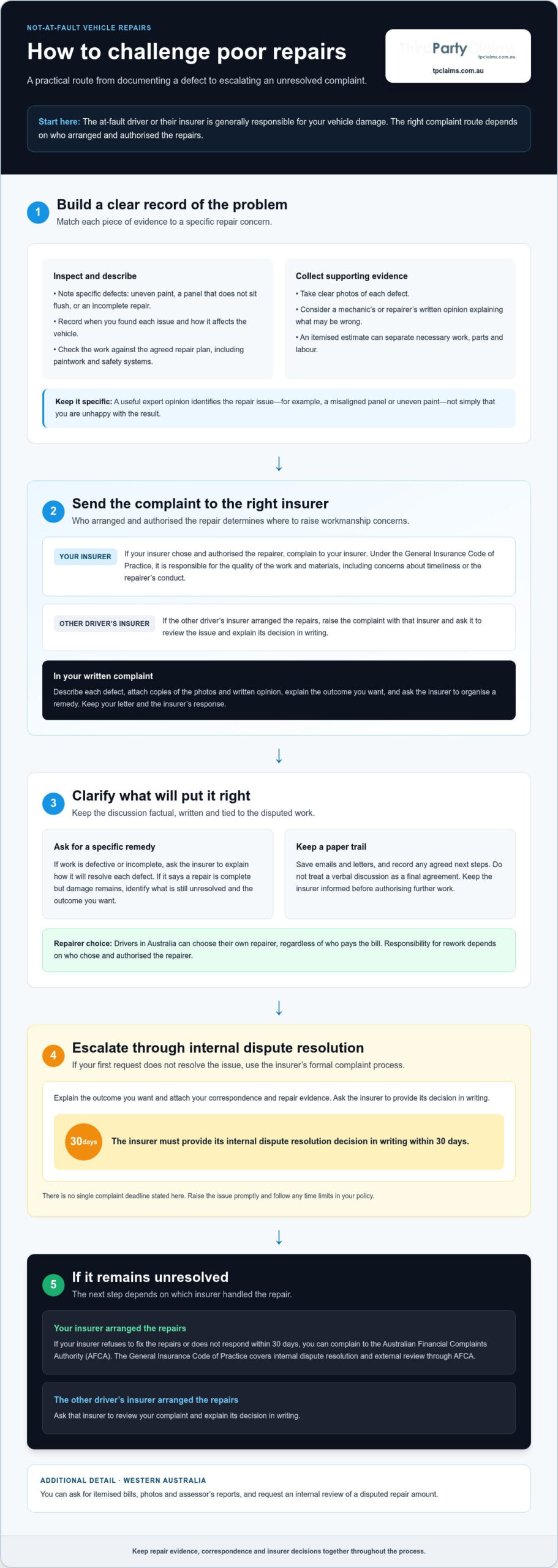
The at-fault driver or their insurer is generally responsible for your vehicle damage. The right complaint route depends on who arranged and authorised the repairs.
-
Raise a repair complaint
Write to the insurer that arranged the work, describe each defect and ask it to organise a remedy. If your insurer chose and authorised the repairer, the General Insurance Code of Practice makes the insurer responsible for the quality of the work and materials. That includes complaints about repair quality, timeliness or the repairer’s conduct. If the other driver’s insurer arranged repairs, raise the complaint with that insurer. Keep your letter and its response.
If the insurer refuses to address defective or incomplete work, responsibility for rework depends on who chose and authorised the repairer. Ask the insurer to explain its decision and how it will resolve each specific defect. Drivers in Australia can choose their own repairer, regardless of who pays the bill, but keep the insurer informed before authorising further work.
-
Negotiate with the other party
Contact the at-fault driver or their insurer to discuss who will pay, what damage the claim covers and when payment will be made. Set out your position in writing, identify the repairs in dispute and keep copies of emails and letters. For example, if the insurer says a panel repair is complete but the damage remains, explain what is unresolved and what outcome you want. Don’t treat a verbal discussion as a final agreement. Record any agreed next steps.
Complaint procedures can vary by state and territory. In Western Australia, you can ask for itemised bills, photos and assessor’s reports, and request an internal review of a disputed repair amount.
-
Use internal dispute resolution
Escalate your complaint through the insurer’s internal dispute resolution process if your first request doesn’t resolve it. Explain the outcome you want and attach your correspondence and repair evidence. The insurer must provide its internal dispute resolution decision in writing within 30 days. There is no single complaint deadline stated here, so raise the issue promptly and follow any time limits in your policy.
If your insurer refuses to fix repairs or doesn’t respond within 30 days, you can complain to the Australian Financial Complaints Authority (AFCA). The General Insurance Code of Practice covers internal dispute resolution and external review through AFCA. For repairs arranged by the other driver’s insurer, ask that insurer to review your complaint and explain its decision in writing.
Do I have to pay for the property damage?
In Australia, the at-fault driver or their insurer is generally responsible for damage to your vehicle. Keep evidence of the crash and repair problems to support your claim or complaint.
-
Document the not-at-fault accident
Save photographs of the vehicle damage, road conditions, signs and accident scene. These details can help show what happened and link the damage to the collision. Keep any police report as a formal record, and ask witnesses for a clear account of what they saw. Record when and how each photo was taken or statement obtained so you can explain the evidence later.
Keep accident-related receipts, including towing or hire car deposits, with your claim documents. They may be recoverable once the claim is settled. A dated folder of images, reports and receipts also makes it easier to respond if the other driver challenges your account, without having to search for documents later.
-
Gather repair and expert evidence
Ask a mechanic or repairer for a written opinion that describes each defect and explains why the work may not meet normal industry standards. For example, request specific observations about a panel that remains misaligned or paintwork that appears uneven. An itemised repair estimate should separate necessary work, parts and labour, so the assessor can see exactly what you dispute.
Support your repair complaint with clear photos and the written opinion, then send copies to the insurer with a concise explanation of the outcome you want. Keep the originals and save the insurer’s replies. If the dispute reaches the Australian Financial Complaints Authority (AFCA), it may assess expert evidence from both you and the insurer. A mechanic’s findings should identify the repair issue, not simply say you’re unhappy with the result.
Keep your evidence focused by matching each photo or report to a specific repair concern. This gives the insurer or AFCA concrete details to assess, rather than a general disagreement about workmanship.
Complaints about repair quality, parts, delays and repairers
Record each repair concern and raise it with the insurer handling the claim. A clear account helps distinguish issues with workmanship, parts and delays.
-
Identify repair quality issues
Inspect the vehicle and note specific examples, such as uneven paint, a panel that does not sit flush or an incomplete repair. Record when you discovered each problem and how it affects the vehicle. Tell the insurer if delays or the repairer’s conduct are also concerns, and stick to facts rather than making broad accusations.
Send your complaint to the insurer that arranged the repairs. If it chose and authorised the repairer, it must handle complaints about work quality, timing or the repairer’s conduct through its complaints process.
-
Check repair protections
Review your policy’s Product Disclosure Statement and repair paperwork for the insurer’s responsibilities and any terms about parts. Check whether aftermarket, recycled or second-hand parts may be used, and compare those terms with the parts fitted. Many insurer-backed network repairs include a workmanship guarantee for as long as you keep the vehicle. Read the written terms to understand what the guarantee covers and how to raise a repair issue.
Keep the repair plan and any warranty documents with your claim records. They show what work and materials were agreed.
- Ask the insurer for a practical remedy, such as correcting a documented defect or explaining a delay. If parts differ from what you expected, refer to the policy wording and repair documents. Keep the insurer’s response with your claim against the at-fault driver or their insurer to make your position clear.
- Keep a dated record of calls, letters, promised updates and repair visits. If the insurer declines your complaint, review its reasons and provide relevant photos or expert evidence. If a repair-cost demand or liability dispute raises legal concerns, seek legal advice before agreeing to a settlement or paying disputed costs.
Repair methods and manufacturer specifications
In Australia, compare the completed work with the agreed repair plan before signing off. Check structural repairs, paintwork and safety systems closely. If you’re disputing repair quality after a not-at-fault car accident, link each concern to the repair method or item of work involved.
- Review the repair plan alongside the vehicle, checking each listed area instead of relying on a general visual impression. Look for unfinished structural work, paint differences or warning lights that weren’t present before repairs. Note the affected part and describe what looks different. This gives the repairer or insurer a specific issue to investigate, rather than a broad concern about the vehicle’s overall condition.
- Take clear photos of visible concerns before authorising further work. Photograph the area from several angles, with close-ups where useful. If a bumper sits unevenly, capture its alignment against the adjoining panel. Keep the images with your repair documents and send them to the party responsible for arranging repairs, along with a clear description of the action you’re requesting.
- Ask how safety systems were checked if repairs involved a bumper or windscreen. Sensors embedded in bumpers and windscreens must be fitted and calibrated precisely. If a parking sensor or driver-assistance feature behaves differently after the repair, describe the symptom and when it occurs. Ask the repairer to explain how the relevant sensor was fitted and calibrated, then keep its response. This makes your concern about the repair method specific.
- Stay in contact with the repair shop while work continues, and raise new repair needs promptly. Before signing off, check that structural repairs, paintwork and safety systems match the agreed plan. If you’re disputing repair quality after a not-at-fault car accident, put the specific concern and requested remedy in writing. Keep the plan, photos and correspondence together so your records show how the issue developed and what response followed.
If an accident claim involves disputed repairs or responsibility, get help with a third-party property damage claim.
TP Claims: Third Party Property Damage Claims
TP Claims can manage a Third Party Property Damage Claim when you’re seeking compensation from the at-fault driver for damage to your vehicle. If an insurer disputes responsibility, repair costs or payment, its Insurance Negotiation Services can help manage discussions and keep your claim moving.
This support may suit you if you’re uninsured, dealing with the other driver’s insurer, or finding it difficult to progress your claim while repair concerns remain unresolved. TP Claims manages the claims process on a no-win-no-fee basis. Its role is to handle the third-party property damage claim and insurer negotiations, not to provide personal injury claims or comprehensive insurance policies.
If you’d like support with a third-party vehicle damage claim, contact TP Claims to discuss your situation.
Take the next step with clarity
A repair dispute doesn’t have to define what happens next. Turn your concerns into a clear request, keep communication in writing and decide what outcome would resolve the issue. A focused approach can help you move from repeated back-and-forth to a practical next step.
If you’re disputing repair quality after a not-at-fault car accident, TP Claims can help manage an eligible third-party claim while you focus on getting back on the road. The service also supports uninsured drivers with claims after an accident on a Victorian road or involving a Victorian-registered vehicle.
Contact TP Claims for help with your situation. You can explain where the claim has stalled and what you need help progressing. Taking that step can make the process feel more manageable, and help you move forward with greater confidence.
Frequently Asked Questions
Need Support with Your Not-at-Fault Repair?
TP Claims assists with eligible third-party motor vehicle claims after an accident that wasn’t your fault on a Victorian road or involving a Victorian-registered vehicle. To make the discussion useful, have your repair documents, insurer correspondence and a brief timeline ready. Explain what remains unresolved, such as a disputed repair invoice or the insurer’s response to a workmanship complaint. Contact TP Claims for a free initial claim assessment, with no obligation.
What if I do nothing?
If you leave poor repairs unchallenged, the defect may remain unresolved and the repair record may not reflect your concerns. Write down what is wrong and when you noticed it, then keep that note with your repair documents. If you’ve received a property damage demand in Western Australia, ignoring it may lead the other party or insurer to start court proceedings, increasing costs.
What if the amount claimed is unfair?
Explain in writing which parts of the amount you dispute and why. In Western Australia, you can ask the insurer for itemised bills, photos and the assessor’s report, then request an internal review. A mechanic’s or repairer’s written opinion can help challenge repair costs. For example, it can identify work or parts that appear unnecessary, rather than relying on a general objection.
What are my rights in Australia if repairs after a not-at-fault car accident are poor?
If your insurer chose and authorised the repairer, the General Insurance Code of Practice makes it responsible for the quality of work and materials. The insurer must also handle complaints about repair quality, timing or the repairer’s conduct through its complaints process. Check your policy’s Product Disclosure Statement for repair terms, including whether aftermarket, recycled or second-hand parts may be used.
How do I complain to the repairer about substandard accident repairs in Australia?
Describe the defects clearly and ask for a specific remedy, such as correcting an unfinished repair. If an insurer arranged the work, send the complaint to that insurer, which handles complaints about the repairer’s work. Include dated photos and identify the affected parts. Keep a copy of your letter and any response so you can track what was agreed.
How do I get an independent vehicle repair inspection or report in Australia, and what does it cost?
Ask a mechanic or repairer for a written inspection report identifying each defect and explaining why the work may fall below normal industry standards. The cost depends on the vehicle, inspection scope and detail required in the report. Request a written quote before booking, and clarify that the report should address the specific repair issues you’re disputing.