
A low insurer estimate doesn’t automatically mean you have to accept it. When an at-fault driver’s insurer offers less than your repair quote, compare whether both estimates cover the same level of repair, then support a request for review with an independent quote or revised repair assessment. Written-off vehicle rules generally apply to vehicles under 4.5 tonnes and less than 15 years old.
It’s understandable to feel stuck when an insurer’s offer doesn’t match your repairer’s quote. You can challenge the assessment or a write-off decision, but you’ll need evidence explaining the repair work and how the vehicle’s value was assessed.
This article explains how to compare repair estimates, support a write-off challenge and pursue a claim as an uninsured driver. A claim may cover reasonable repair costs or market value or replacement cost less salvage, whichever is lower, as well as reasonable towing costs and incidentals.
Key Takeaways
- Compare the repair scope, parts, labour and methods behind each estimate to identify what is driving the difference.
- Build a write-off challenge around evidence of the vehicle’s condition, value and repair needs.
- Use invoices and assessment records to show how claimed repair costs relate to the work actually completed.
- If you’re uninsured, understand which vehicle damage and related expenses may form part of a claim against the at-fault party’s insurer.
Can You Challenge a Write-Off Decision?
Yes. You can dispute a repair assessment or write-off decision by giving the insurer evidence that addresses its valuation, repair scope or assumptions.
If you’re an uninsured driver, you may claim reasonable repair costs from the at-fault party’s insurer. A property damage claim deadline depends on the state or territory and the circumstances, so identify the applicable time limit promptly rather than assuming there’s one national deadline.
Challenging a repair or write-off decision
A challenge asks the insurer to reconsider its assessment using evidence about the vehicle and proposed repairs. This matters because dismantling may reveal hidden damage, while a repairer can explain disputed parts, labour or repair methods.
Send a written request for review with an independent repair quote, photographs, service records and evidence of the vehicle’s condition or upgrades. Ask the insurer to explain its decision and respond to specific differences. If it won’t reconsider, use its internal complaints process or escalate to an external dispute resolution body. A letter of demand can set out the damage claim, amount sought, supporting documents and related losses, such as reasonable towing costs. Read any proposed cash settlement or release carefully: a full-and-final release may limit further recovery for the losses it covers.
For vehicles under 4.5 tonnes and less than 15 years old, written-off vehicle laws usually apply. An insurer must notify the Written-Off Vehicle Register within 7 days of assessing a write-off, whether or not you are its customer. A statutory write-off cannot be legally re-registered; a repairable write-off may be repaired and re-registered if it meets safety standards. The Australian Financial Complaints Authority cannot remove a register listing.
Market value and claim decisions
Market value is what the vehicle was worth before the accident, assessed using factors such as age, condition, kilometres travelled, service history and comparable listings. This matters because a vehicle’s pre-accident value and repair costs can affect whether an insurer treats it as a write-off.
Insurers may consider a write-off when estimated repairs approach or exceed around 60-75% of market value. Challenge an undervaluation with comparable vehicle listings and records showing condition or upgrades. These details can help explain why the insurer’s valuation does not reflect the vehicle’s pre-accident worth.
Actual repair costs compared with claimed costs
An insurer’s estimate may differ from the final repair bill. The key question is whether the amount claimed reflects reasonable work actually completed.
If the approved amount falls short, the insurer doesn’t automatically have to pay the difference. You can pursue reasonable, supported repair costs from the at-fault driver. Who ultimately pays depends on liability and how the claim is resolved.
Support your claim with the actual repair invoice, the repairer’s assessment report and any parts or subcontractor invoices. Insurers should request these records when assessing repair claims. An estimate alone may not establish what the repairer charged or which work was completed.
Check that the invoice identifies the repairer and matches the vehicle and damage. Compare each item with the assessment, including parts, labour, repair methods and subcontracted work. Clearly explain differences, such as why a particular part or repair step was needed. Keep payment records and written discussions with the insurer together.
A Queensland dispute illustrates why actual costs matter. The invoice came from an entity associated with the representatives, rather than from the actual repairer.
After learning the actual cost, the insurer offered that amount less defence costs already incurred. The plaintiff declined. The dispute shows the risk of claiming more than reliable repair records support.
Before rejecting an offer, compare it with the genuine invoice and evidence for each claimed item. If you need help managing a third-party property damage claim, get support with your claim.
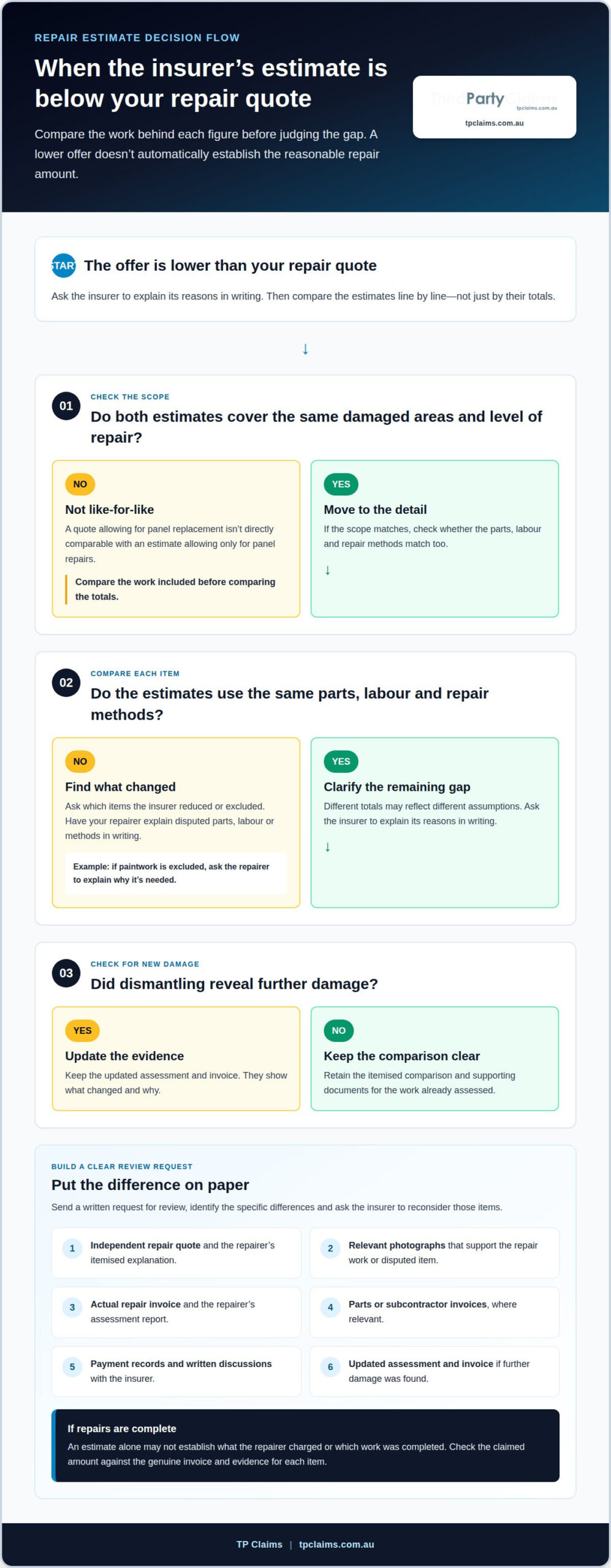
Comparing smash-repair quotes and insurer repair estimates
An insurer’s estimate may differ from your smash-repair quote. Compare the work included in each figure before deciding whether the gap is justified.
Insurer payments below a repair quote
Yes, an at-fault driver’s insurer can offer less than your repair quote. That offer doesn’t automatically establish the reasonable repair amount. It may reflect different assumptions about parts, labour or repair methods. Ask the insurer to explain its reasons in writing, then compare them with your repairer’s itemised explanation before deciding how to respond.
Assessing and disputing repair costs
Insurers assess repair costs by considering the damage and the work, parts and labour included in the claim. If the at-fault driver’s insurer offers less than your repair quote, ask which items it has reduced or excluded. Your repairer can address those points, including why a replacement part or particular repair method is needed. Insurers should request the actual repair invoice and any parts or subcontractor invoices when assessing repair claims.
Compare the estimates line by line. Check whether both cover the same damaged areas and level of repair. A quote allowing for panel replacement isn’t directly comparable with an estimate allowing only for panel repairs. Also compare labour, parts and stated repair methods. Different totals may reflect different work, not simply a lower price for the same job.
Ask the repairer to clarify disputed items in writing. If, for example, the insurer’s estimate excludes paintwork, ask the repairer to explain why it’s needed. Send that explanation with relevant photographs and ask the insurer to reconsider the specific item.
If dismantling reveals further damage, keep the updated assessment and invoice. These documents show what changed and why. A clear comparison keeps the discussion focused on the work each estimate covers.
Uninsured drivers: dealing with the at-fault insurer
You can still pursue a property damage claim if you didn’t insure your vehicle. While insurance providers such as si-insurance.com highlight the benefits of maintaining comprehensive vehicle cover to avoid self-managed recovery disputes, uninsured motorists are not left without options. The claim is against the at-fault party, through their insurer where applicable, and should focus on reasonable losses caused by the collision.
The amount you may claim is limited to your reasonable loss. For vehicle damage, this means reasonable repair costs or reasonable market value or replacement cost, less salvage value, whichever is lower. You may also claim reasonable towing costs and incidentals connected with the accident. List these separately so the insurer can assess each item.
For example, if repairing the vehicle would cost more than its reasonable pre-accident value, the claim may be assessed using the value or replacement-cost option, less salvage. If repairs are the lower reasonable amount, document the repair work instead. Salvage value represents what remains of the damaged vehicle.
Build a clear claim file with the repair quote or assessment, damage photographs, towing receipts and records for incidentals. Add evidence of the vehicle’s condition and value, such as its service history and comparable listings. Keep copies of emails, letters and the insurer’s assessment. These records help explain how each amount relates to the accident.
Ask the insurer to explain any reduction against your evidence. If its estimate excludes a repair item, request the reason and compare the scope with your repairer’s assessment. For towing or another incidental, provide the receipt and explain how it relates to the collision. Keep communications in writing so the disputed items and responses are clear.
Uninsured drivers can face a demanding claims process while arranging transport and repairs. Get help managing an uninsured driver claim if you need support presenting the vehicle damage claim and its related losses.
TP Claims: Third Party Property Damage Claims
TP Claims can help with disputed repair costs or a property damage claim involving an uninsured driver. Its third-party claims management and insurance negotiation services help eligible claimants deal with the at-fault party’s insurer and present their claim clearly.
If you’re uninsured, TP Claims can manage the claims process and supporting information. Accident replacement vehicle assistance may also help you stay mobile while your vehicle is being repaired, subject to conditions.
Consider support if insurer correspondence, repair assessments or claim documents are becoming difficult to manage. Contact TP Claims for a free initial claim assessment, with no obligation.
Choose your next move with confidence
If the at-fault driver’s insurer offers less than your repair quote, base your next decision on the gap and the insurer’s explanation. Separate the items you agree with from those still in dispute. This gives you a clearer basis for continuing negotiations, seeking a review or considering the offer.
Before agreeing to a settlement, read its terms carefully and make sure you understand what it covers. Keep the insurer’s response and your decision in writing. A clear record helps you focus on the unresolved issue and avoid confusing exchanges.
If you’d like help with the next step, contact TP Claims to discuss your options. You can take the time to understand your position and choose a way forward that feels clear and considered.
Frequently Asked Questions
Who Actually Decides, The Insurer or the Repairer?
The repairer estimates the work and cost; the insurer assesses the claim and decides what it will offer. Neither estimate automatically resolves a disagreement. If, for example, the repairer includes a component the insurer excludes, ask both to explain the difference in writing. You can then decide whether to seek a review, negotiate further or consider the offer in light of the evidence.
What should I do if the insurer’s repair estimate is lower than my panel beater’s quote?
Ask the insurer to identify the specific items it has reduced or rejected, and request its assessment in writing. Then ask your panel beater to address those points rather than simply repeat the total. If the insurer questions a replacement component, for example, ask the repairer to explain why it’s needed. Keep revised estimates and insurer replies with your claim records.
Can I choose my own repairer after a not-at-fault car accident in Australia?
You can nominate a repairer, but that doesn’t necessarily mean the insurer will accept every item or the full quote. If you’re claiming under your own policy, read its terms about choosing a repairer—advisers such as MyGen Insurance Brokers often recommend checking these policy conditions and endorsements when arranging cover to prevent complications down the track. In Victoria, many insurance policies include a choice-of-repairer clause. If you’re claiming against the at-fault driver’s insurer, distinguish your preferred repairer from the amount the insurer considers reasonable.
How can I get an independent vehicle repair assessment or second quote?
Arrange for a repairer who didn’t prepare the insurer’s estimate to inspect the vehicle and provide a written, itemised assessment. Give them the insurer’s estimate and identify the parts you want reviewed. Ask them to record visible damage, proposed work and any assumptions. If dismantling reveals more damage, request an updated assessment that clearly explains the additional work and why it’s needed.