
A two-week limit is a common belief, not a general rule for not-at-fault accident replacement cars. How long you can legally keep one usually depends on how long your car is being repaired or, if it’s written off, until your claim is finalised and settlement funds arrive. The key is that the hire period remains reasonable for the time your own vehicle is unavailable.
It’s understandable to worry that the replacement car could be taken away before you’re ready, especially when repairs or claim decisions are delayed. This article explains what an accident replacement car is, how the reasonable hire period works and what can affect how long you keep it.
You’ll also see how repairable and written-off vehicles are treated, and how the at-fault driver’s insurer may fit into the costs. That should help you understand what to expect while your car is off the road.
Key Takeaways
- Eligibility for a replacement vehicle after a not-at-fault crash depends on the circumstances of the accident and the other driver’s cover.
- For a repairable car, the expected hire period is tied to the work needed and when repairs are completed.
- Insurers assess whether hire costs are reasonable, including whether the replacement vehicle is comparable to your own.
- Claims management and insurance negotiation can help if you’re dealing with an uninsured at-fault driver or a dispute about accident-related costs.
What is an accident replacement car?
An accident replacement car is a temporary vehicle that lets you continue your usual travel while your own car is damaged, being repaired or assessed, or otherwise off the road. In Australia, a not-at-fault driver may be able to claim reasonable alternative transport costs after another driver causes a crash. The replacement should generally be comparable to the car you normally drive, rather than a larger or more expensive model without a clear need.
Eligibility generally depends on who caused the accident and the circumstances of the claim, including whether the at-fault driver has third-party property damage or comprehensive insurance. You do not need comprehensive insurance yourself to make a claim as an eligible not-at-fault driver. Your car must be unavailable because of the accident, and the hire period and vehicle choice need to be reasonable. Reasonable hire costs may form part of a claim against the at-fault party.
Written-off vehicle rules usually apply to vehicles under 4.5 tonnes and less than 15 years old. If the damaged car is declared a total loss, the claim may turn on whether replacement costs less than repair, with salvage value considered. You can usually keep the replacement car until the claim is finalised and settlement funds are received. If repairs are delayed, the period may extend while the car remains unavailable; repairs affecting the safety cell can take several weeks.
For a repairable vehicle, the replacement period usually ends when repairs are complete. Choose a comparable vehicle and keep records of repair updates, assessment delays and any proposed hire cutoff. If you are told the hire must end before your car is ready, explain in writing why you still need transport and provide relevant repair or claim updates.
A vehicle damage claim needs evidence of both fault and loss. Keep records showing how the other driver caused the incident, along with documents that support the amount claimed, including repair and hire records. This evidence helps explain why you needed a replacement vehicle and how long your own car remained unavailable.
How long a replacement car can be kept
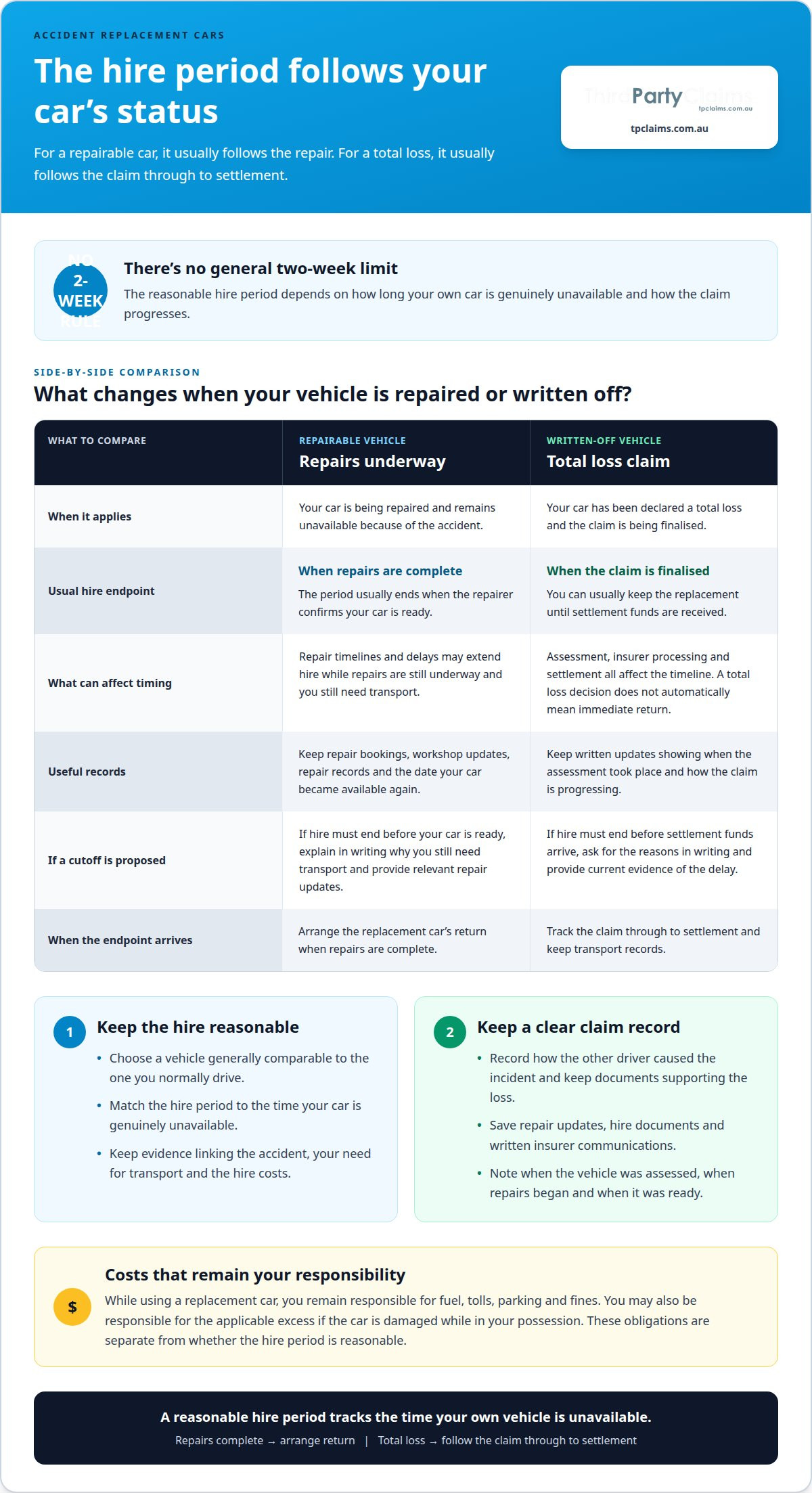
There is no general two-week limit for not-at-fault replacement car hire. The reasonable period depends on why your vehicle is unavailable and how the claim progresses. For a repairable car, hire usually ends when repairs are complete. Delays may extend the period if repairs are still underway and you still need transport.
If your vehicle is declared a total loss, you can usually keep the replacement until the claim is finalised and settlement funds are received. The assessment, insurer processing and settlement all affect the timeline. A total loss decision does not automatically mean you must return the replacement immediately. Keep written updates showing when the assessment took place and how the claim is progressing.
To support a reasonable hire period, keep evidence linking the accident to your need for transport. This may include repair bookings, workshop updates, written insurer communications and the date your car became available again. Keep your vehicle registration and insurance details with your claim records. If the insurer sets a cutoff before repairs are complete or settlement funds arrive, ask for the reasons in writing and provide current evidence of the delay.
Being involved in a crash doesn’t mean every replacement vehicle or every day of hire will be recoverable. The vehicle should be comparable to your own, and the period should match the time your damaged car is genuinely unavailable. Once repairs are complete, arrange its return rather than continuing the hire without a clear reason. If the car is written off, track the claim through to settlement and keep transport records. For a disagreement about the insurer’s decision, insurance negotiation support can help address the dispute.
Reasonable hire period for a not-at-fault driver
The reasonable hire period reflects how long your vehicle is genuinely unavailable after the incident. For a repairable car, it usually ends when repairs are complete. Repair timelines, a write-off assessment and insurer processing delays can all affect the period. The replacement should suit your transport needs and be comparable to your own vehicle. For example, needing a car while yours is at the repairer is different from continuing hire after the repairer confirms it is ready. Your circumstances and supporting evidence help explain the period claimed.
The at-fault driver’s insurer may cover reasonable hire costs while your car is unavailable. To claim those costs, you generally need to establish that the other driver was at fault and show the loss incurred. If the at-fault driver is uninsured, there may be no insurer managing the claim, and you may need to pursue it against the responsible driver. Although this changes who you deal with, it remains important to show how each hire day relates to your unavailable vehicle.
Keep a clear record of the incident and your circumstances as they change. Note when the vehicle was assessed, when repairs began and when the workshop said it was ready. Save repair updates, hire documents and written communications about any proposed cutoff. If an insurer disputes the period, explain in writing why you still need transport and provide relevant evidence. You remain responsible for fuel, tolls, parking and fines while using a replacement car. You may also be responsible for the applicable excess if it is damaged while in your possession. These obligations are separate from whether the hire period is reasonable.
How long will an at-fault insurer pay for a hire car?
In Australia, the at-fault driver’s insurer may cover the reasonable cost of a comparable hire car while your own vehicle is unavailable. There is no single fixed hire period for every not-at-fault claim. The period depends on the time needed for repairs or, if your car is written off, the time taken to finalise the claim and receive settlement funds.
For a repairable car, the hire period usually ends when repairs are complete. If the workshop is still repairing accident damage, your vehicle remains unavailable. A written-off car follows a different process: the assessment and settlement timeline affect how long you need replacement transport. Delays matter when they extend the time your vehicle is genuinely off the road.
The insurer considers whether the hire cost and duration are reasonable. Choosing a vehicle comparable to your own helps show that the expense meets your transport needs. Reasonable hire costs may be claimed from the at-fault party after a crash involving your car and another vehicle. Keep hire records and written repair or assessment updates to support the dates claimed.
If the at-fault driver is uninsured, there may be no insurer handling their side of the claim. You may need to pursue replacement-car costs directly from the responsible driver. Claims management for uninsured-driver matters can help address the property damage claim and related transport costs.
If an insurer proposes ending payment before your car is repaired or your total-loss claim is settled, ask for its reasons in writing. Provide current information showing why you still need transport and how the repair or settlement is progressing. Get help with an uninsured-driver claim if there’s no insurer to manage the claim against.
TP Claims: Accident Replacement Vehicles
TP Claims manages accident replacement vehicle arrangements and related third-party property damage claims. If your car is off the road and you are unsure how to handle hire costs, insurer negotiations or delays, TP Claims can manage the claims process on your behalf.
TP Claims also manages claims involving uninsured drivers. This can help when the at-fault driver has no insurer handling the property damage claim. TP Claims manages the process and negotiates with insurers on clients’ behalf, helping keep the claim and supporting information organised.
For help with an accident replacement vehicle or a third-party property damage claim, contact TP Claims to discuss your situation.
Take the next step with confidence
Understanding how long you can legally keep an accident replacement car gives you a clearer basis for discussing transport costs and your claim’s progress. If the insurer’s position is difficult to resolve, focus on your circumstances and the evidence supporting your claim. Keeping a clear record makes it easier to explain why you needed the vehicle and for how long.
TP Claims manages third-party property damage claims, insurance negotiations and claims involving uninsured drivers. This support may help if you are dealing with a disputed hire period, an insurer negotiation or an at-fault driver without insurance. You can discuss how the claims process applies to your accident.
Contact TP Claims to discuss your options and decide on a practical next step. You don’t have to work through a complicated claim without support.
Frequently Asked Questions
How Long Can You Keep a Hire Car After an Accident?
There is no general two-week cap on not-at-fault hire car use in Australia. The relevant period depends on how long your vehicle is unavailable and whether the hire remains reasonable. For example, a workshop delay may affect the end date if repairs are still underway. Keep dated repair updates and claim correspondence to explain the period clearly.
Do Insurance Policies Limit Hire Car Duration?
Your own car insurance policy may include specific hire-car benefits and conditions, so its cover may differ from a claim against another driver. Read the policy wording to understand when your insurer pays, what events trigger cover and when the benefit ends. Seeking reasonable costs from the at-fault party is a separate basis for a claim from relying on your own policy.
What Costs Are You Responsible for During the Hire Period?
You remain responsible for day-to-day costs such as fuel, tolls, parking and fines or infringements. You may also be responsible for the applicable excess if the replacement vehicle is damaged while in your possession. Keep fuel receipts separate from parking records, and report any damage promptly through the process set out in the hire arrangement.
What Happens When Your Repairs Are Complete?
Once your vehicle is ready, the repair-related need for a replacement car usually ends. Arrange its return promptly and keep confirmation of the return date, such as a receipt or email. If repairs are complete but you cannot collect your car immediately, tell the relevant claims contact and explain the collection issue in writing rather than continuing the hire without an update.
What Is a Not-At-Fault Replacement Car?
An accident replacement car is a temporary vehicle used when another driver caused the crash and your own car is unavailable. A comparable car can help you maintain everyday transport, such as travelling to work while your vehicle is repaired. Eligibility generally depends on the accident circumstances and whether the at-fault driver has third-party property damage or comprehensive insurance.
How long can you keep a replacement car after an accident in Australia?
In Australia, how long you can legally keep an accident replacement car depends on why your car is unavailable and the progress of repairs or settlement. For a repairable vehicle, the hire period usually lasts until repairs are complete. If your car is written off, you can usually keep the replacement until the claim is finalised and settlement funds are received. Keep updates showing how the claim is progressing.