
If you’re making a car accident claim in Australia after being hit by an overseas licence holder, fault matters more than where their licence was issued. You may be able to claim vehicle damage and related losses from the driver responsible, even if they’re uninsured. In New South Wales, an injured person can claim against the at-fault driver’s Compulsory Third Party insurer.
It’s understandable to feel unsure about what to do next, especially if the other driver is visiting or you’re concerned they may leave the country. First, focus on your safety, reporting obligations and preserving evidence. Don’t admit fault or sign documents you don’t understand.
This guide covers what to record, when to report the crash, which not-at-fault benefits may apply and how property damage claims can proceed if the other driver has no insurance. It also explains when a solicitor may help with a dispute and how claims management can make the process easier.
Key Takeaways
- Record the other driver’s details, witness contacts and the scene while the information is fresh.
- Police reporting requirements differ between states, so follow the rules that apply where the crash happened.
- Your options after an accident can include not-at-fault benefits, depending on the type of loss and circumstances.
- An uninsured driver may still be responsible for reasonable damage costs; clear evidence can help you pursue a claim.
Evidence and steps to take after an overseas accident
An overseas licence alone doesn’t establish whether the driver’s insurance covers a crash in Australia. Ask for the insurer and policy details, then request written confirmation that the policy applies to this accident.
-
Exchange accident details
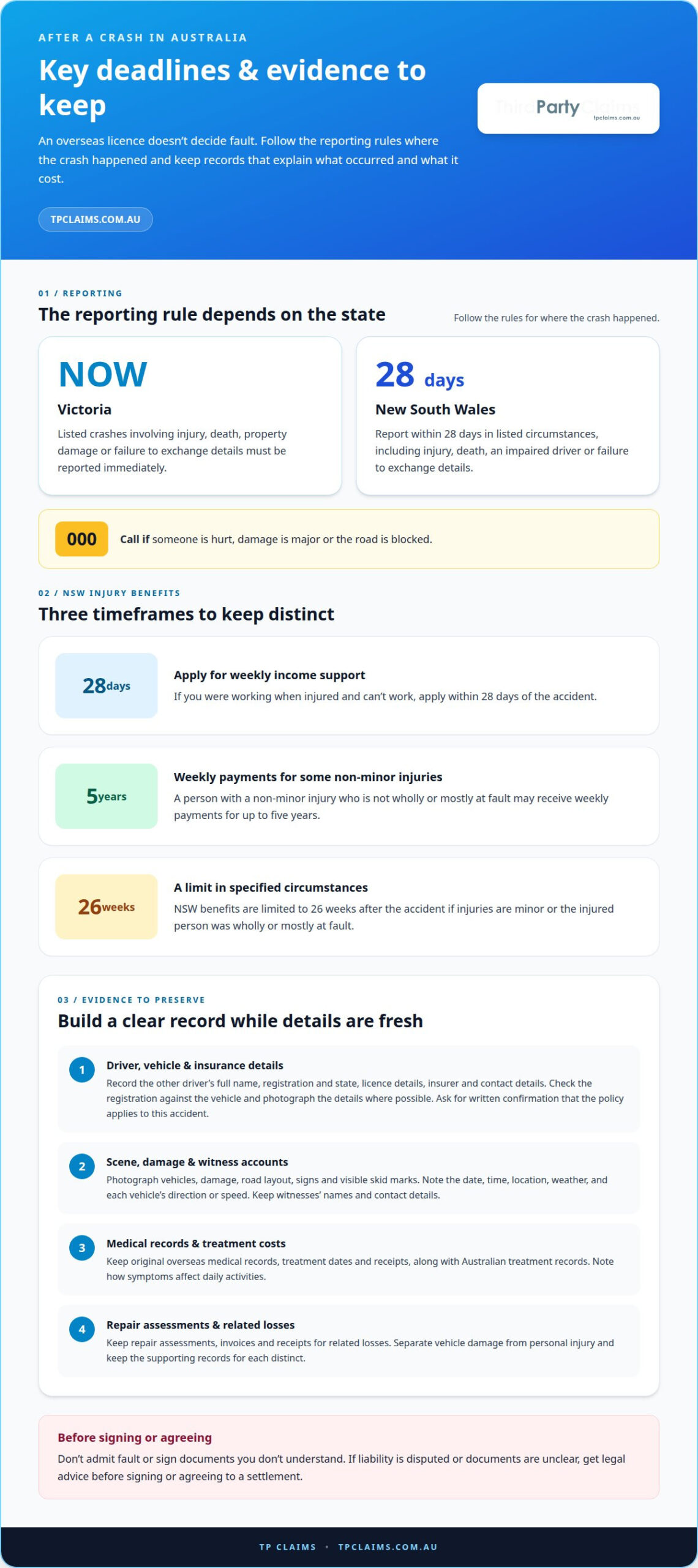
Collect the other driver’s full name, vehicle registration and state, licence details, insurer and contact details. Victoria Legal Aid also recommends exchanging vehicle registration and insurance information. Check the registration against the vehicle and photograph the details where possible. Don’t admit liability or sign documents you don’t understand, as either could complicate a later dispute.
-
Collect evidence of fault and damage
Photograph the vehicles, damage, road layout, signs and any visible skid marks as soon as possible. Record the crash date, time and location, the weather, and each vehicle’s direction or speed. Get witnesses’ names and contact details, and keep repair assessments, invoices and receipts for related losses. These records can help explain how the collision happened and what it cost, supporting discussions to resolve the claim.
- Follow the applicable reporting rules where the accident happened. In Victoria, listed crashes involving injury, death, property damage or failure to exchange details must be reported immediately. In NSW, report within 28 days in listed circumstances, including injury, death, an impaired driver or failure to exchange details. Call 000 if someone is hurt, damage is major or the road is blocked.
- Keep medical evidence together. If you receive treatment overseas, collect the original medical records, treatment dates and receipts, even if an injury initially seems minor. Store copies with any Australian treatment records and note how symptoms affect your daily activities. This evidence can link the injury to the crash and document losses. If the driver disputes liability or documents are unclear, get legal advice before signing or agreeing to a settlement.
Not-at-fault accident benefits
An overseas licence doesn’t determine who caused the crash. Identify the driver responsible, then establish whether your losses involve vehicle damage, personal injury or both.
-
Determine who was at fault
Compare each driver’s account with the circumstances of the collision and the available evidence. Witnesses can describe what they saw, while photographs and vehicle damage may support or challenge an account. Keep witnesses’ contact details and note any differences between statements. In New South Wales, a driver who causes a crash through negligence is at fault. A disagreement about what happened is a dispute, not proof that either driver is responsible.
-
Assess shared fault and liability
Set out each driver’s actions before impact, including lane changes, turns and stops. Don’t assume the other driver is wholly liable simply because they hold an overseas licence. If evidence indicates both drivers contributed, responsibility may be shared. For an injury claim, Australian joint and several liability principles can allow full compensation to be recovered from a liable defendant, even where other parties also share responsibility.
-
Claim not-at-fault accident benefits
Separate vehicle damage from personal injury when identifying possible benefits. In NSW, an injured person can claim against the at-fault driver’s Compulsory Third Party insurer. If you were working when injured and can’t work, apply within 28 days for weekly income support from the accident date. For non-minor injuries, a person not wholly or mostly at fault may receive weekly payments for up to five years.
- Check how your own insurance responds if you’re found not at fault. An insured driver may have their excess waived after providing the responsible person’s details. NSW benefits are limited to 26 weeks after the accident if injuries are minor or the injured person was wholly or mostly at fault. In Victoria, an uninsured person may need to sue for damages. Consider the serious practical issue: court action can be costly, and recovery may be difficult if the driver has no income or assets.
Can I claim compensation if an overseas licence holder caused a car accident in Australia?
Yes. An overseas licence doesn’t, by itself, prevent you from making a claim. If an overseas licence holder hits you, the key issues for a car accident claim in Australia are fault, your losses and the relevant state or territory process.
- Identify the loss you’re claiming for. If you were injured in a New South Wales crash, you can claim against the at-fault driver’s Compulsory Third Party (CTP) insurer. A CTP claim concerns injury, while damage to your vehicle or belongings follows a separate property damage process. Keep these losses distinct when preparing your claim, and record which documents support each part.
- Establish who caused the collision. An overseas licence doesn’t decide fault or replace evidence about how the crash happened. Use witness accounts, photographs and the drivers’ descriptions to explain the events. If the other driver disputes responsibility, organise the evidence by date and identify the details that support each account. For a claim after an overseas licence holder hits you in Australia, evidence of fault remains central.
- Make an injury claim through the applicable state or territory process. In NSW, the claim is made against the at-fault driver’s CTP insurer, not simply because the driver holds an overseas licence. Identify the insurer and provide information about the collision, your injuries and treatment. Keep medical records and receipts together to support your account of the injury and related losses.
- Separate injury compensation from vehicle damage. In NSW, a person whose car was damaged by another driver may claim for the damage and related losses from that driver. If the overseas driver is insured, their insurer may be involved in resolving the property damage claim. If the driver has no insurance, they remain responsible for reasonable loss or damage. The process depends on the type of loss, evidence of fault and insurance involved.
- Keep deadlines and disputes in view. In NSW, an injured person should report the crash to police within 28 days; a later compensation claim may require an explanation for delay. If an insurer rejects or reduces an injury claim, follow its review process promptly. For a serious traffic offence or a crash where police believe you were at fault, get legal advice.
Who pays for damage by an uninsured overseas driver?
- Claim reasonable damage costs from the at-fault driver. An overseas licence or lack of insurance doesn’t remove that responsibility. Your claim may include reasonable vehicle repairs and other losses caused by the crash. Keep repair assessments, invoices and evidence linking each claimed cost to the collision. Separate crash-related damage from pre-existing wear or damage so your claim clearly explains what you’re seeking.
- Check whether your own insurance can respond. Contact your insurer and provide the crash details, the other driver’s information and available repair documents. An insured driver’s policy covers repair costs if they’re involved in an accident, regardless of who the other party is. Your insurer can explain how your policy applies and whether it will pursue the uninsured driver for costs it pays.
- Send a clear written demand if you’re pursuing the driver directly. Describe how the collision happened, why you believe the driver was at fault, and list each repair or other property loss. Attach supporting documents and state the amount sought. A letter may set a payment period, such as 14 days. Keep a copy and records of any response or payment proposal.
- Consider the state’s process if the driver doesn’t pay or respond. In Queensland, a motor vehicle property damage claim must be made within 6 years. A claim may be lodged with the Queensland Civil and Administrative Tribunal or a court after an unanswered or unpaid demand. Court action takes time, and recovering money can be difficult if the driver has no income or assets. If you’re dealing with an uninsured driver and repair costs, get help with your vehicle damage claim.
TP Claims: Third Party Property Damage Claims
TP Claims manages third-party property damage claims when another driver has damaged your vehicle or property. If the at-fault driver is uninsured, TP Claims can manage the claim process on a No Win, No Fee basis where applicable. TP Claims also negotiates with insurers about responsibility and repair costs.
Gather your crash records, repair documents and the other driver’s details before starting a claim. TP Claims manages the claims process on a No Win, No Fee basis where applicable. Accident replacement vehicles may also be arranged, subject to conditions.
If you need help pursuing a vehicle damage claim or handling insurer negotiations, contact TP Claims to discuss your circumstances.
Choose your next step with confidence
The other driver’s overseas licence doesn’t need to define what happens next. If you’ve been hit by an overseas licence holder, moving your car accident claim forward in Australia starts with a clear account of what remains unresolved. Identify whether the outstanding issue is responsibility, the amount claimed or who should respond. This gives your next conversation a practical focus and makes the different parts of the claim easier to address.
Before taking that step, put your key documents and correspondence in date order. Write down the outcome you’re seeking and any questions you still need answered. Keep a copy of any offer or settlement terms, and make sure you understand what losses they cover before agreeing. A clear file helps you explain your position and decide what to address next. You don’t have to manage the process alone. Contact TP Claims about your accident to discuss a way forward and take the next step with greater clarity.
Frequently Asked Questions
How can a solicitor help?
A solicitor can explain your legal options, assess disputed liability and help you understand settlement documents. For example, if the overseas driver gives a different account, a solicitor can review witness statements, photographs and repair records alongside your version. They can also explain court risks and relevant deadlines. Property damage claims management has a different focus: progressing the claim and dealing with insurers.
How long does it take to process a claim?
There’s no single processing time for every Australian motor accident claim. Straightforward vehicle damage claims may progress once responsibility and repair costs are clear. Disputes about fault, missing documents, insurer responses or further injury treatment can add steps. Keep a dated record of requests and replies, and send complete supporting documents together. This makes it easier to identify what is holding up the next decision.
What compensation am I entitled to?
What you may claim depends on your losses, the evidence and who was responsible. A vehicle damage claim can seek reasonable repair costs and other losses caused by the crash. An injury claim follows a separate process and may involve benefits through the applicable state or territory scheme. Keep receipts and records for each expense, and link each claimed loss to the accident rather than assuming every cost is covered.
What compensation and benefits are available?
Depending on the circumstances, possible recovery may relate to vehicle repairs, damaged personal property or other accident-related expenses. An injured person may also qualify for benefits under their state or territory’s motor accident scheme. For instance, NSW has weekly income support benefits for eligible injured people who cannot work. The type of loss, fault findings, injury and applicable scheme affect which options are available.
What happens if you don’t agree with the claim outcome?
Ask for the outcome and its reasons in writing, then identify the specific point you dispute. For example, you may challenge a repair assessment with another relevant assessment or clearer photographs. Respond with evidence tied to the disputed issue and keep copies of correspondence. In NSW, parties to a car accident dispute should try to settle it without going to court.
What if I disagree with the insurer’s decision?
Request an internal review and explain why the decision should change, attaching evidence that addresses its reasons. In NSW, an injured person must apply for an insurer’s internal review within 28 days of the insurer’s original decision. Keep the decision date, review request and supporting documents together. The review concerns the insurer’s decision, so clearly state the outcome you seek and the evidence supporting it.