
A car that pulls to one side after a collision may have misaligned wheels or damaged suspension components. Who pays for wheel alignment and hidden mechanical damage after a collision depends on who was responsible and whether the repairs can be linked to the crash. If another driver caused it, you may be able to claim reasonable, accident-related repair costs from them or their insurer.
It’s frustrating to collect your car and find it still doesn’t feel right, especially when the damage isn’t obvious. This guide explains what can cause pulling, how hidden mechanical damage may affect a claim, and what evidence can help link repairs to the collision. It also covers what to check before accepting your vehicle and how to raise concerns promptly.
Key Takeaways
- Pulling, uneven tyre wear or an off-centre steering wheel can point to alignment trouble; knocking or excessive bouncing may indicate physical suspension damage.
- After a collision, damage can sit beneath the bodywork. The impact area and symptoms help guide what a mechanical inspection should assess.
- Payment for related repairs depends on responsibility for the crash and evidence linking the damage to it, not simply on when the fault appeared.
- Keep repair records and inspection findings, and raise new symptoms promptly so there’s a clearer record of how they relate to the collision.
Suspension damage
A collision can alter wheel angles or damage suspension components, and each problem needs a different repair. An alignment check can also reveal damage that an adjustment alone won’t fix.
Alignment Issues Versus Suspension Damage
Alignment issues mean the wheels sit at incorrect angles; suspension damage means a component is bent, broken or displaced. An alignment adjustment can correct wheel angles, but it can’t repair a damaged control arm or other suspension part.
For example, if the steering wheel sits off-centre after an impact, a technician can measure the alignment angles. If they remain outside specifications after adjustment, damaged components may be preventing the wheels from holding their correct position.
When Alignment Requires Suspension Repairs
Suspension repairs may be needed if an inspection finds damaged parts or technicians can’t bring the wheel angles within specification. A front subframe shifted by a few millimetres can throw the angles out, even when the bodywork looks intact.
Adjusting the wheels alone may not address the cause. The displaced or damaged component needs assessment and, where necessary, repair or replacement before the alignment can be set correctly. This helps identify whether the claim should include more than an adjustment.
Possible Damage and Its Symptoms
Suspension damage can affect handling and stability, and may cause noises or vibrations. After a collision, watch for knocking or clunking sounds, excessive bouncing, or a change in how the vehicle behaves while braking.
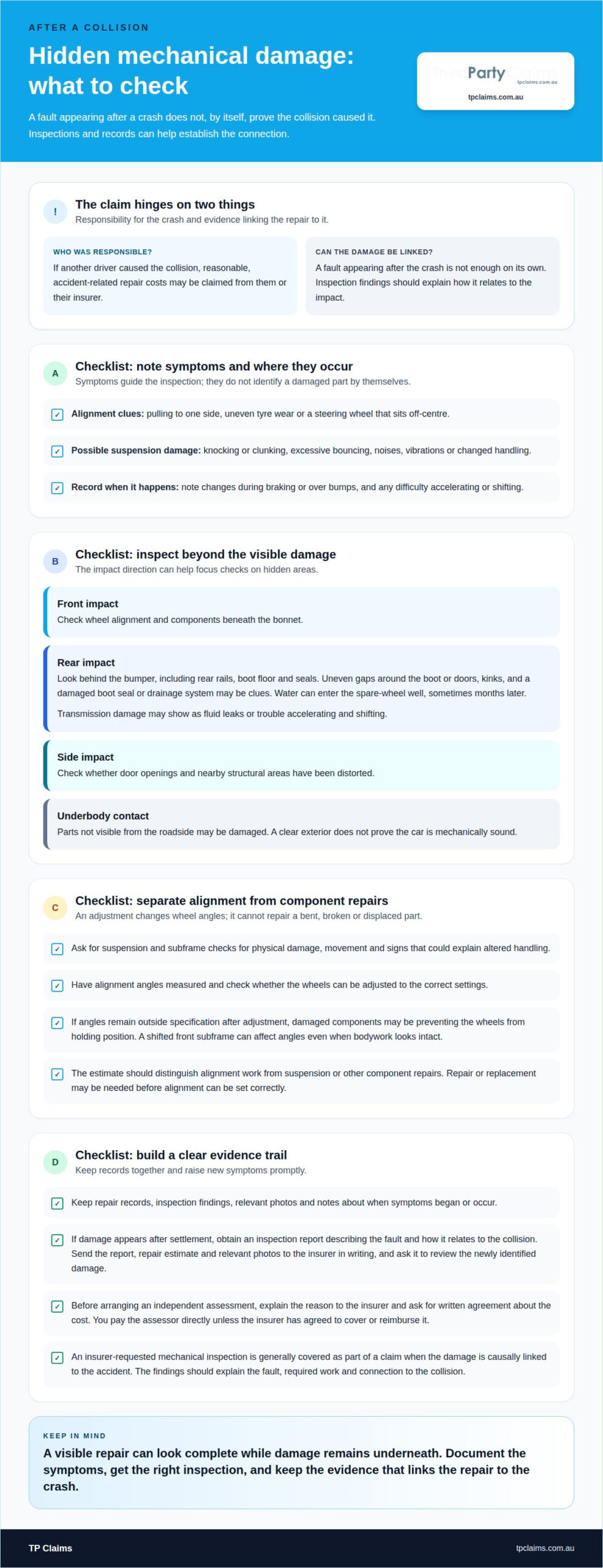
Pulling to one side, uneven tyre wear and an off-centre steering wheel can signal alignment trouble. These symptoms don’t identify the damaged part on their own, but they give a technician specific behaviour to investigate. Note when each change occurs, such as during braking or over bumps.
Suspension and Subframe Inspections
A post-collision inspection checks the suspension and subframe for physical damage, movement and signs that could explain altered handling. It may include measuring alignment angles and checking whether the components can be adjusted to the correct settings.
Across Australia, alignment costs depend on the vehicle and the work required. A standard passenger car, a performance car, a 4WD and some European models may need different alignment work. The inspection may also identify suspension repairs beyond an adjustment, so the estimate should separate alignment work from component repairs.
Front-, rear-, side- and underbody collision damage
Damage can extend beyond visible dents, and the direction of impact can affect different parts of a vehicle. A rear bumper that looks intact, for example, doesn’t rule out damage underneath.
Hidden Damage After Rear-End Impacts
Rear-end damage can affect parts behind the bumper, including the rear rails, boot floor and seals. Distorted panels or a damaged boot seal may cause problems that only become apparent after the initial repair.
After a rear impact, check for uneven gaps around the boot and doors, or kinks in the rear rails and boot floor. A damaged boot seal or drainage system can let water into the spare-wheel well, sometimes months later. Transmission damage can also cause fluid leaks or trouble accelerating and shifting.
How Different Impacts Affect the Vehicle
A front impact can affect wheel alignment or components beneath the bonnet, while a side impact can distort door openings and nearby structural areas. Underbody contact can damage parts that aren’t visible from the roadside, so a clear exterior doesn’t prove the car is mechanically sound.
For example, a collision can alter alignment angles even when the wheels look straight. Rear-end frame damage may need assessment at a collision repair shop, where specialists can use frame-straightening machines to realign the chassis. Damaged frame sections may need to be cut out and replaced to restore structural integrity.
Responding to Damage Found After Settlement
If hidden damage appears after the insurer has settled, obtain an inspection report describing the fault and how it relates to the collision. Send the report, repair estimate and relevant photos to the insurer in writing, and ask it to review the newly identified damage. The settlement documents and evidence linking the fault to the crash are important.
Keep records of new symptoms, such as a transmission-fluid leak or difficulty shifting, and avoid treating the original settlement as proof that later damage is unrelated. If another driver caused the collision, third-party property damage claims can help manage a claim involving evidence-backed repair costs.
Insurance cover for accident-related mechanical damage
Payment usually depends on whether the damage is linked to the accident and how the inspection was arranged. A mechanical fault appearing after a crash doesn’t, by itself, establish that connection.
Paying for an Independent Assessment
Most insurers cover a mechanical inspection requested as part of a claim when the damage is causally linked to the accident. This matters if an assessment is needed to identify whether a reported fault, such as a transmission problem, stems from the impact.
If you arrange an independent assessment yourself, you pay the assessor directly unless the insurer has agreed to cover or reimburse it. Before booking, explain the reason for the inspection to the insurer and ask for written agreement about the cost. This can help avoid confusion over who pays if the report identifies damage.
The inspection findings should explain the fault, the work required and its connection to the collision. For example, a technician may be able to determine whether a diagnostic code appeared before or after the accident. That timing can support the claim, particularly when the fault wasn’t obvious during the initial assessment.
Disputing an Insurer’s Damage Decision
To dispute an insurer’s decision, respond in writing with evidence addressing its reasons for rejecting or limiting the repair claim. A clear technical report can explain how the damage relates to the impact, while dated photos, repair records and diagnostic findings can help establish when symptoms appeared.
Ask the insurer to identify the evidence behind its decision, then provide any missing material and request a review. For instance, if it considers a transmission fault unrelated, submit the mechanic’s explanation and information about when the diagnostic code appeared. Keep copies of every report and message, and record the date of each conversation. Similar principles apply across wider insurance disputes; for property claims, professional advocates such as Apex Adjusting Group help policyholders document comprehensive damage and secure appropriate settlements.
Timing can affect the strength of the evidence. An insurer may be less likely to cover tyre wear linked to alignment if it’s only noticed months after the crash. Report new symptoms promptly, preserve inspection records and focus on the mechanical link between the accident and the repair being claimed.
What evidence is needed to prove hidden mechanical damage was caused by a collision?
Evidence needs to connect the mechanical fault to the impact, rather than merely show that a fault exists. A collision damage inspection can document affected components, while diagnostic findings and repair records help explain when the problem began.
Build a clear timeline. Record the collision date, when symptoms first appeared and when each inspection took place. For example, a new dashboard warning light after the crash gives useful context, although some vehicles can have pending diagnostic codes without illuminating the check-engine light.
Ask the inspecting technician to describe the fault, the tests performed and how the damage could relate to the collision. Diagnostic-code timing can help: a technician may be able to determine whether a code appeared before or after the accident. A report linking that finding to a specific mechanical problem is more useful than a diagnosis alone.
- Inspection findings: Keep the written report, including the affected part and recommended repairs.
- Photos: Save images of the impact area and any visible damage, even if the mechanical fault sits underneath.
- Records: Keep repair invoices, diagnostic results and dated notes about new symptoms, such as a warning light.
- Earlier condition: Use available service records to show the vehicle’s condition before the collision.
A car can have serious hidden damage without visible body damage, so an exterior photo alone won’t explain the mechanical cause. A professional inspection can identify damage beneath the panels and record whether the findings match the impact area. For instance, a report can distinguish a fault consistent with collision damage from one unrelated to the crash.
Send the insurer the inspection report and supporting records together, then explain how each item connects the fault to the accident. Keep copies of the material and the insurer’s response. If you need support presenting evidence for a third-party property damage claim, get help organising the claim details and repair documents.
TP Claims: Third Party Property Damage Claims
TP Claims manages third-party motor vehicle accident claims for eligible people, including claims for accident-related property damage. If another driver caused the collision and an insurer disputes whether hidden mechanical damage is related, TP Claims can manage the claim process and insurance negotiations, including organising supporting evidence.
TP Claims also manages claims for uninsured drivers, where there’s no at-fault driver’s insurer to handle the property damage claim. For a truck collision dispute, the firm’s service addresses the claim issues arising from that collision. The right support depends on the circumstances of the accident and the claim.
Inspection reports, diagnostic findings and repair records can help show what damage occurred and how it connects to the impact. TP Claims manages the claims process on a “No Win, No Fee” basis where applicable, helping you handle the paperwork and insurer discussions.
Contact TP Claims to discuss your third-party property damage claim.
Take the next step with confidence
Unresolved repair costs can leave you unsure how to move forward, especially when an insurer questions whether mechanical damage came from the crash. Who pays for wheel alignment and hidden mechanical damage after a collision depends on responsibility and evidence linking the fault to the impact. A clear claim helps put that evidence before the insurer.
TP Claims manages third-party accident claims, including car repair claims and claims for accident-related expenses. If the at-fault driver is uninsured, TP Claims can manage the property damage claim and explore other avenues. Its claims service can take care of the process and insurer discussions on your behalf.
For help with a collision-related property damage claim, contact TP Claims. Take the next step when you’re ready, and move forward with support.
Frequently Asked Questions
What should you do if your car pulls to one side after an accident?
Arrange an inspection and promptly tell the insurer that the car pulls after the collision. If it feels unsafe to handle, avoid driving it until it’s assessed. Note when the pulling occurs, such as during braking or on a straight road, and keep the inspection findings with your claim. These details can help distinguish an alignment concern from another mechanical cause.
Who pays for wheel alignment after a car accident in Australia?
Who pays for wheel alignment and hidden mechanical damage after a collision depends on responsibility for the crash and evidence connecting the repair to it. If another driver caused the accident, you may be able to claim related repair costs from that driver or their insurer. An alignment report and repair invoice can show what work was needed and why.
Does the at-fault driver’s insurer cover hidden mechanical damage after a collision?
To establish who pays for wheel alignment and hidden mechanical damage after a collision, show how the fault relates to the impact. The insurer may cover reasonable mechanical repairs when its policyholder is responsible and the evidence supports that link. For example, a mechanic’s report explaining how impact damage caused a newly discovered steering or transmission fault gives the insurer a clearer basis to assess the repair request.
How do Australian insurers assess and approve accident-related wheel alignment repairs?
An insurer assesses whether alignment work is accident-related and supported by the inspection findings. It may consider the damage location, diagnostic results, repair scope and whether the proposed work addresses the collision damage. Provide the written assessment and quote, and request approval before authorising extra repairs. Keep the insurer’s response with your claim records, particularly if the repair scope changes.
Can I claim wheel alignment costs under comprehensive car insurance in Australia?
You may be able to claim alignment costs under your comprehensive policy if it covers the collision and the alignment work is part of repairing that damage. The policy’s exclusions, excess and claim conditions affect what you pay. For example, an adjustment linked to a crash may be treated differently from routine alignment work unrelated to an insured event.
Can an insurer refuse to pay for wheel alignment by calling it pre-existing wear or maintenance?
An insurer may dispute the cost if it considers the alignment issue unrelated to the collision, such as routine wear or maintenance. Respond with evidence addressing that reason directly: a technician’s findings, the timing of new symptoms, earlier service records and dated photos. Ask for the decision and its reasons in writing, then request a review with the supporting material.