
What if the van that keeps your delivery work moving is suddenly off the road, and a small car simply won’t do? If your courier van was damaged in an accident that wasn’t your fault, a suitable replacement may help you keep working. A courier van accident not at fault replacement vehicle claim can raise questions about cargo capacity, equipment and responsibility for hire expenses.
It’s understandable to want to get back on your route quickly without ending up with a replacement that can’t handle your loads or a claim that creates more uncertainty. Match the vehicle to your day-to-day work, and keep in mind that recovering related expenses depends on the circumstances and evidence.
This guide explains what to consider before using a replacement van, which records can help show why you need a comparable vehicle, and how to manage the property damage claim. TP Claims provides accident replacement vehicles for businesses and manages third-party property damage claims and insurance negotiations, helping reduce the administrative load while your claim progresses.
Key Takeaways
- A damaged courier van can disrupt scheduled deliveries, so a suitable temporary vehicle may help keep your work moving while yours is assessed or repaired.
- For a courier van accident not at fault replacement vehicle, compare cargo capacity, loading access, route needs and equipment fit before choosing temporary transport.
- Record the incident and vehicle damage, then keep details that show how your van supports your delivery work.
- Arranging a replacement vehicle doesn’t establish fault or guarantee that hire expenses will be recovered. Outcomes depend on the circumstances and evidence.
- TP Claims manages third-party property damage claims and insurance negotiations, and provides accident replacement vehicles for individuals and businesses.
Courier van accident not at fault: why a replacement vehicle matters
A damaged courier van can put more than your transport on hold. Scheduled runs may need to be missed or rearranged, customers may need updates, and deliveries can fall behind while you work out how to keep operating. An accident replacement vehicle is temporary transport used while your damaged vehicle is assessed or repaired. For a courier, simply having a vehicle isn’t always enough. It needs to support the work your van normally does.
Everyday transport and delivery transport have different demands. A passenger car might get you from A to B, but it may not fit bulky parcels, tools, shelving or other equipment you rely on. Consider your routes, how often you load and unload, and whether a temporary vehicle can safely accommodate your usual setup. These practical details help explain why a comparable commercial vehicle may matter to your business.
There are two separate questions after a crash: whether a replacement vehicle can be arranged, and whether related expenses can be recovered. The answer to either depends on the circumstances and evidence. Access to a replacement vehicle doesn’t guarantee recovery of its expenses. Keep those questions distinct so you understand what’s being arranged without assuming the final claim outcome.
How a damaged van can disrupt courier work
A van off the road can leave you juggling dispatch changes, rescheduling delivery windows and contacting customers while trying to maintain service. The impact depends on your business and workload, so avoid assuming a particular financial loss. Instead, note the runs affected and the practical reason you need a suitable vehicle.
Think through what your van carries and how you use it: parcel volume, loading access, fitted shelving, tools or other work equipment. A passenger car may not offer the space or access your daily route requires. Australia’s broader road-safety context is reflected in historical figures for motor vehicle deaths in Australia, but your replacement vehicle needs depend on your work and the damage to your van.
What “not at fault” means for replacement vehicle decisions
You may believe another driver caused the collision, but your account alone doesn’t guarantee a replacement vehicle or recovery of related expenses. The evidence and circumstances of the claim can affect what happens next. Photos, witness details and a clear record of the damage may help explain the incident and your vehicle needs. For broader guidance on the process, see the not-at-fault replacement car guide.
For a courier, describing the job matters as much as describing the damage. Be ready to explain what your van carries, which equipment must fit and how losing access affects scheduled work. This gives the claim discussion useful context without treating fault, vehicle access or expense recovery as automatic.
How replacement vehicles and accident claims fit together
Managing transport and progressing a property damage claim are related, but they’re not the same task. A clear sequence can help you keep practical arrangements moving while preserving useful information for the claim. Keep a record from the outset, especially if you need to explain why an ordinary car wouldn’t meet your delivery requirements.
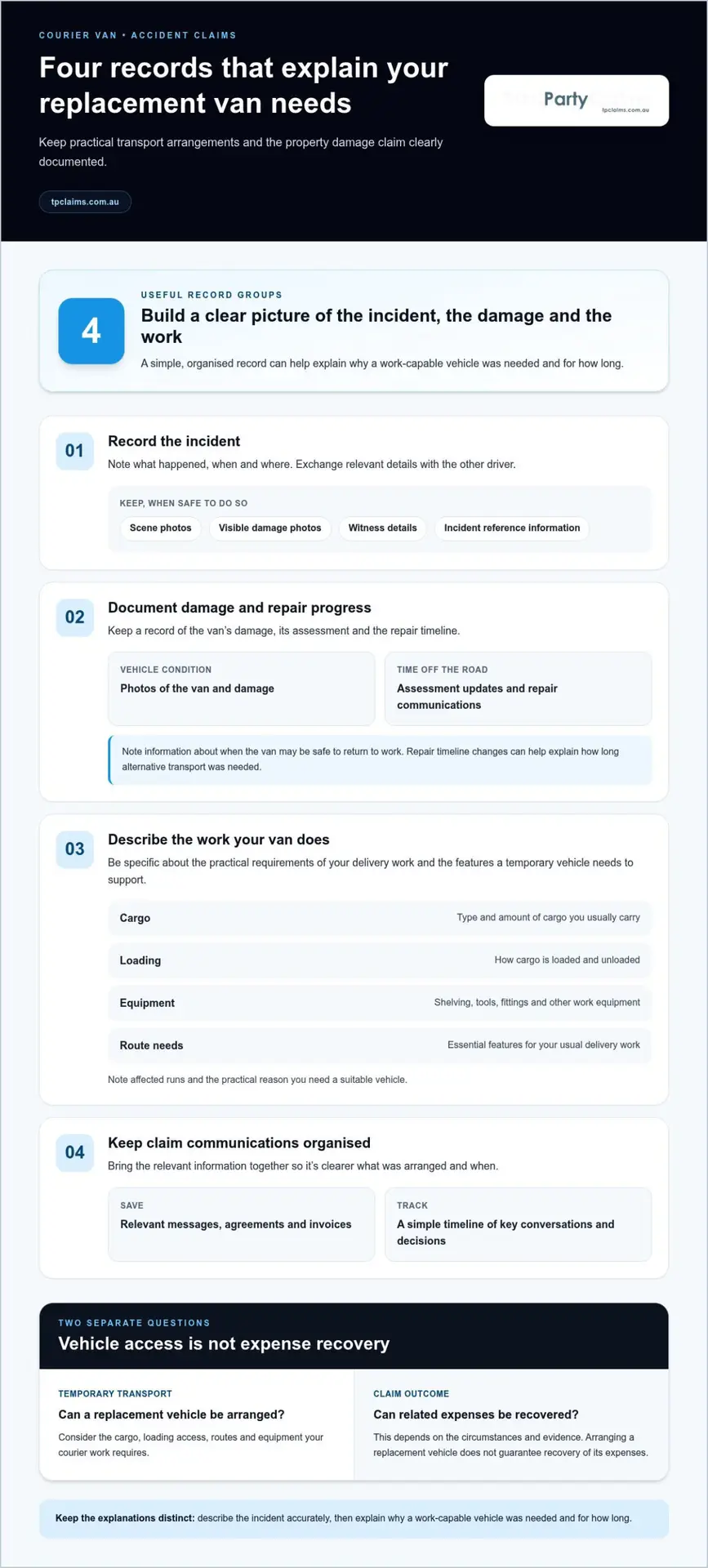
- Record the incident. Note what happened, when and where, and exchange relevant details with the other driver. Take photos of the scene and visible damage when it’s safe to do so, and keep witness details or any incident reference information.
- Document the damage and repair progress. Photograph the van and keep assessment updates, repair communications and information about when it may be safe to return to work. Changes to the repair timeline can help explain how long you needed alternative transport.
- Describe your work needs. Write down the van’s business use, typical load, delivery equipment and essential features. For example, note whether you rely on shelving, particular loading access or space for tools as well as parcels.
- Keep claim communications organised. Save relevant messages, agreements and invoices, and make a simple timeline of key conversations and decisions. These records can clarify what was arranged and when, but they don’t guarantee that expenses will be recovered.
This information connects the vehicle request to the work it needs to support. A courier van accident not at fault replacement vehicle claim may involve questions about both the collision and the need for temporary transport. Keep those explanations distinct: describe the incident accurately, then set out why a work-capable vehicle was needed and for how long.
Information that helps explain your replacement needs
Be specific and practical. Identify the type and amount of cargo you usually carry, how it’s loaded, and any equipment or fittings that affect your work. Keep repair updates alongside your notes so the period without your van is clear. Retain hire agreements and invoices too. These documents show the arrangements made, but the circumstances and evidence still affect whether related expenses may be recovered.
Why claim management and vehicle access are different
Arranging temporary transport addresses an immediate business need. Managing a third-party property damage claim involves dealing with the other party’s claim communications and negotiating property damage matters. One doesn’t automatically settle the other: having a vehicle arranged doesn’t establish fault or promise reimbursement. TP Claims manages claims on a no-win-no-fee basis. This applies to its claims management service, not to vehicle hire, and doesn’t mean vehicle costs have no conditions or will be reimbursed.
Claim pathways can also depend on the type of claim and the state or territory. For instance, the Motor Accident Insurance Board provides information about its motor accident insurance scheme. Scheme information should be considered in its relevant context, rather than assuming every scheme deals with vehicle damage or replacement transport in the same way.
Keeping vehicle arrangements and property damage discussions organised can reduce the administrative load. See how TP Claims can help manage your claim while you focus on keeping your business moving.
Choose a replacement van that fits your courier work
The most useful replacement is one that can handle the work your damaged van was doing, not simply one that gets you from stop to stop. Base your choice on the vehicle’s actual job: the size and volume of your usual load, how goods are accessed, what equipment must travel with you and the demands of your routes. This gives you a practical way to explain why a particular vehicle type may be suitable, without presenting an upgrade as a work requirement.
Match vehicle capacity and access to your deliveries
Start with a typical working day. Consider how many parcels you carry, whether larger items need to lie flat, and how often you load and unload. A cargo area that looks adequate on paper may be awkward if its loading height or access makes frequent stops harder. Record fixed shelving, refrigeration or specialised equipment if these are essential to your work, and note whether they can be safely accommodated.
Route conditions matter too. Frequent kerbside stops, tight parking spaces, longer distances or mixed urban and regional runs can influence what feels practical. The National Road Transport Association (NatRoad) offers broader information for Australia’s road transport sector, while your own delivery pattern helps define the vehicle needs specific to your business.
Compare a temporary workaround with a work-capable van
These categories are a starting point for comparing function, not a statement that a particular vehicle will be available or that its costs will be recoverable. Compare each option with your documented load and equipment needs.
| Vehicle category | Cargo and loading | Route and equipment fit | Practical trade-off |
|---|---|---|---|
| Passenger car | Limited space and access for bulky or high-volume loads | May suit lighter delivery duties without fixed equipment | Could help with basic transport, but may not support normal courier work |
| Light commercial vehicle | More dedicated cargo space than a passenger car; layout varies | May suit some parcel runs, depending on load and fittings | Compare access and usable space with your daily requirements |
| Suitably equipped van | Designed around a separate cargo area, with capacity depending on configuration | May better accommodate shelving or work equipment if compatible | Closer fit for van-based deliveries, but suitability still depends on your needs |
Use the comparison to describe the minimum practical features your deliveries require. For example, if shelving carries sorted parcels, explain how it supports loading and access during a run. Consider a courier van accident not at fault replacement vehicle in terms of comparable work capacity, rather than a preferred upgrade or an assumption about what a claim will cover.
If the collision involved a truck and the damage or responsibility is disputed, the claim may involve additional issues beyond choosing temporary transport. TP Claims handles complex truck collision disputes, including truck collision property damage matters.
What to do after a courier van accident: a checklist
A collision is stressful enough without having to remember every detail later. Work through these steps in order where practical, and keep the records together. Safety comes first. The notes and documents you gather afterwards can help explain the damage, your van’s normal courier use and any replacement vehicle arrangements.
- Check for immediate danger. Move to a safe place if you can do so without putting anyone at risk. Contact emergency services if needed, and don’t approach or move a vehicle if the scene is unsafe.
- Exchange details and record the incident. Note the date, time and location for your claim file, details of the other parties involved, and any available witness information. Follow the reporting requirements that apply where the crash occurred. Requirements can differ between states and territories, so don’t assume one rule applies across Australia.
- Photograph the scene and van when safe. Capture visible damage and relevant vehicle features from useful angles. Don’t disturb an unsafe scene or put yourself in traffic to take photos. Keep any incident reference details with your notes.
- Preserve evidence of business use. Save dispatch records, delivery schedules or other work records that show how the van was ordinarily used. Note essential fittings and equipment, such as shelving or tools, where they help explain the vehicle’s role.
- Track assessment and repair progress. Keep messages, reports and updates about the damage, repair steps and expected return to service. If timing changes, save the update so your records reflect what happened.
- Keep replacement vehicle records together. Save the agreement, invoices, usage dates and relevant communications. Make a short note explaining how the vehicle’s capacity and features matched essential courier work. Records help describe your arrangements, but don’t guarantee that related expenses will be recovered.
Document the crash, van damage and business use
Write down details while they’re fresh, then add information as it becomes available. A simple timeline can connect the incident to the van’s damage, your usual work and the steps taken to assess repairs. Keep original photos and documents where possible, and organise copies in one folder so they’re easier to find when claim questions arise.
Keep replacement vehicle records organised
Keep vehicle documents separate from repair updates, but link them with dates. This helps show when temporary transport was used and why its features mattered to your runs. The wider third-party property damage claim process involves its own evidence and communications; clear records can make those discussions easier to follow.
If you’re dealing with a courier van accident not at fault replacement vehicle and a related property damage claim, TP Claims manages third-party claims and insurance negotiations. Get help managing your claim with TP Claims.
How TP Claims can help keep your courier business moving
A damaged work van can leave you trying to keep deliveries on track while also dealing with the other party’s property damage claim. TP Claims manages third-party property damage claims and insurance negotiations for not-at-fault drivers, helping take some of the communication and administration off your hands. That support can let you focus on essential business tasks while the claim progresses.
TP Claims also provides accident replacement vehicles to individuals and businesses. For a courier, the practical question is how temporary transport can support the work your van normally does, including the space, access and equipment your runs require. Whether related expenses can be recovered depends on the circumstances and evidence. No particular claim outcome is guaranteed.
Claims support while your van is being repaired
Claim discussions can involve explaining what happened, responding to communications and keeping information about damage and repairs organised. TP Claims manages third-party property damage claims and negotiates with insurers, reducing the burden of handling those discussions alone. Claims management and replacement transport address related but distinct needs. Support with a claim doesn’t automatically provide a vehicle or determine whether its costs will be recovered.
TP Claims manages claims on a no-win-no-fee basis. This applies to its claims management service, not to vehicle hire. It doesn’t mean replacement transport is free, has no conditions or will lead to reimbursement. Keeping the distinction clear helps you understand what the claims service covers and how replacement vehicle costs depend on your circumstances.
Take the next step with TP Claims
You don’t need to have every detail resolved before explaining what happened. A clear account of the incident, photos or other damage evidence, repair updates and a description of your courier work can help set out the situation. Useful vehicle details include typical loads, essential fittings, delivery equipment and the features that make a temporary vehicle workable for your routes.
Start with the information you already have. TP Claims can manage the third-party property damage claim and provide accident replacement vehicle support for your circumstances. The claim outcome and recovery of expenses depend on the available information and circumstances.
Talk to TP Claims about your accident to share what happened and explain how your courier van supports your business. You can discuss the claim and replacement vehicle needs with a team that handles vehicle damage claims and accident replacement vehicles.
Set up your next steps with confidence
A short, organised record can help you explain both the accident and the role your van plays in your business. Note what happened, gather the information you have about the damage, and describe the vehicle features your work depends on. You don’t need to have every question answered before seeking support.
TP Claims manages third-party property damage claims on a no-win-no-fee basis, provides accident replacement vehicles for individuals and businesses, and handles complex truck collision disputes. The claims service doesn’t mean vehicle hire is free, and neither a replacement vehicle nor recovery of related expenses is guaranteed. The circumstances and available evidence matter.
If you’re dealing with a courier van accident not at fault replacement vehicle situation, share the incident details and your courier vehicle requirements with TP Claims. The team can help manage the claims process and provide accident replacement vehicle support.
Talk to TP Claims about your courier van accident to discuss your claim and replacement vehicle needs.
Frequently Asked Questions
Can I get a replacement van after a courier accident that was not my fault?
You may be able to arrange a replacement van, but access depends on the circumstances and isn’t guaranteed just because you weren’t at fault. Explain how the damaged van was used for work and why a commercial vehicle may be needed rather than ordinary transport. If your courier business relies on more than one vehicle, clarify which one was damaged and how its absence affects your operations.
Can I claim the cost of a replacement van from the at-fault driver?
You may seek recovery of reasonable replacement vehicle expenses, but payment isn’t automatic. The facts, evidence and claim circumstances matter. Keep records that show the vehicle used, the period it was needed and the expenses incurred. If the other driver disputes responsibility or the amount, those issues may need to be addressed as part of the property damage claim. Don’t treat arranging a vehicle as confirmation that its costs will be reimbursed.
What if the replacement car cannot carry my courier deliveries?
Explain what the car can’t accommodate, such as parcels that won’t fit safely or equipment required for your runs. Give concrete examples, like delivery tubs or a fixed shelving unit, rather than simply saying the car is unsuitable. Keep a note of the mismatch and how it affects the work you can perform, then consider a more practical vehicle option.
Do I need to own a courier van to arrange a replacement vehicle?
Not necessarily. A van may be owned by your employer or business, or you may be an authorised driver rather than the registered owner. Explain your connection to the vehicle, who uses it for deliveries and how the accident affects your work. The ownership arrangement can be relevant to the claim, so provide accurate details and don’t assume that being the regular driver alone guarantees access to a replacement.
What evidence should I keep after a courier van crash?
Keep more than photos of the damage. A dashcam file, if available, may preserve what happened before and during the collision; save the original file and note its date. You can also retain delivery manifests, job schedules or vehicle service records that help establish how the van was used. Keep copies of messages with other parties and claim contacts, and record when each item was created or received.
Can a replacement vehicle be used for business deliveries?
It may be possible, but don’t assume every replacement vehicle arrangement permits commercial use. Read the agreement and confirm the permitted use, any driver conditions and relevant limits before using the vehicle for deliveries. Check that it suits the work and that your cargo can be carried safely. If the terms don’t clearly address courier use, resolve that point before starting your runs.