
Your car is off the road, but the cost of getting around may form part of your claim. To learn how to claim loss of use for a private vehicle after a collision, claim against the other driver or their insurer if you were not at fault or were only partly at fault, and support your request with evidence. The period claimed is generally tied to the time needed to repair or replace your vehicle.
Being without your car can disrupt work, family commitments and everyday errands. It’s reasonable to want a clear answer about what transport costs you can claim and how long a replacement vehicle may be needed.
This guide explains how to make a loss-of-use claim in Australia, assess a reasonable hire-car period, gather useful records and write a clear claim letter. It also covers how fault, repair timelines and supporting evidence can affect your request, so you can approach the process with greater confidence.
Key Takeaways
- If you weren’t at fault, set out the costs you’re seeking and explain how the collision left you without your vehicle.
- Support the hire-car period you claim with a clear timeline of repairs or replacement and records of when your car was unavailable.
- Gather accident details, repair documents and hire-car records so your claim is easier to assess.
- Write a concise claim letter that explains what happened, states the amount sought and attaches evidence for each cost.
How do I claim compensation for loss of use of a vehicle?
Set out the transport costs caused by the accident and connect each expense to the time your motor vehicle was unavailable. Your claim depends on fault, evidence and the applicable state or territory rules.
Identify recoverable vehicle costs
List the extra transport expenses you incurred because you couldn’t use your car. These may include hire-car charges, taxi fares and public transport costs. Keep receipts and note the dates and journeys. If you didn’t hire a replacement, you can still describe how the accident restricted your use of the vehicle and support your account with records.
Assess replacement transport costs
Choose transport that suits your practical needs and is comparable with your usual vehicle. Whether a hire-car rate is reasonable depends on factors such as the vehicle type, rental period and evidence of the rate charged. Keep the hire agreement and invoices. Include dates showing when your car was unavailable, and leave out unrelated travel and costs.
- Establish fault. Record what happened, exchange driver details and notify your insurance company. In Queensland, you must be able to show another person was at fault to claim property damage from them. A court can apportion damages between parties by responsibility; in South Australia, recoverable damages may also be reduced to reflect your share of fault.
- Claim from the responsible party. You can seek reasonable, evidenced costs from the at-fault driver. The process for involving the other driver’s insurer can depend on the circumstances of the claim. If they’re uninsured, write to the driver directly with your account and supporting documents.
- Check how your excess applies. If you claim through your own comprehensive policy, check its excess and the policy terms. Check with your insurer before seeking to recover an excess from another party.
- Respond to a dispute. Ask the insurer for its reasons in writing, then answer each point with relevant receipts, repair records or transport details. Rules vary by state and territory; generally, the law where the collision occurred governs.
Hire-car duration while a vehicle is repaired or a claim is settled
Build your transport claim around the repair timeline and the costs caused by the motor vehicle accident. Keep the repairer’s updates so you can explain why you needed replacement transport for each part of that period.
Account for repair time and maintenance exclusions
Use the repairer’s assessment and progress updates to show when your vehicle was unavailable and why repairs took that long. Loss-of-use compensation generally relates to an accident or covered incident, not routine maintenance or wear and tear. Separate scheduled servicing from collision repairs, and keep records identifying the work caused by the accident.
Set the hire-car period
Match the hire period to the time reasonably needed to repair or replace your vehicle. The repair shop’s timeline and the insurer’s approval may inform the period considered. Keep dated updates about parts, repair progress and collection, and record when the car became roadworthy. Some comprehensive insurance policies provide a hire or replacement vehicle for a limited period, so read your policy terms.
- Get written repair quotes. In Queensland, obtain a written quote covering parts and labour from a reputable repairer. Two quotes aren’t required, but they’re advisable. Keep each quote and compare the repair scope, not just the total, so the claimed work relates to damage caused by the accident.
- Identify the responsible party and repair route. In Queensland, you can claim repair costs from the responsible party, use comprehensive insurance or pay for repairs yourself. Another driver’s insurance alone doesn’t establish responsibility. Record who was involved and how the collision happened, then keep correspondence showing which route you chose.
- Connect each transport day to the repair timeline. Provide the hire agreement, invoices and repair updates together. If the vehicle is replaced rather than repaired, keep documents explaining when it became unusable and when replacement arrangements were completed. This helps distinguish necessary transport from time unrelated to the accident.
If temporary transport is part of your situation, explore accident replacement vehicle options while keeping your repair and hire records together.
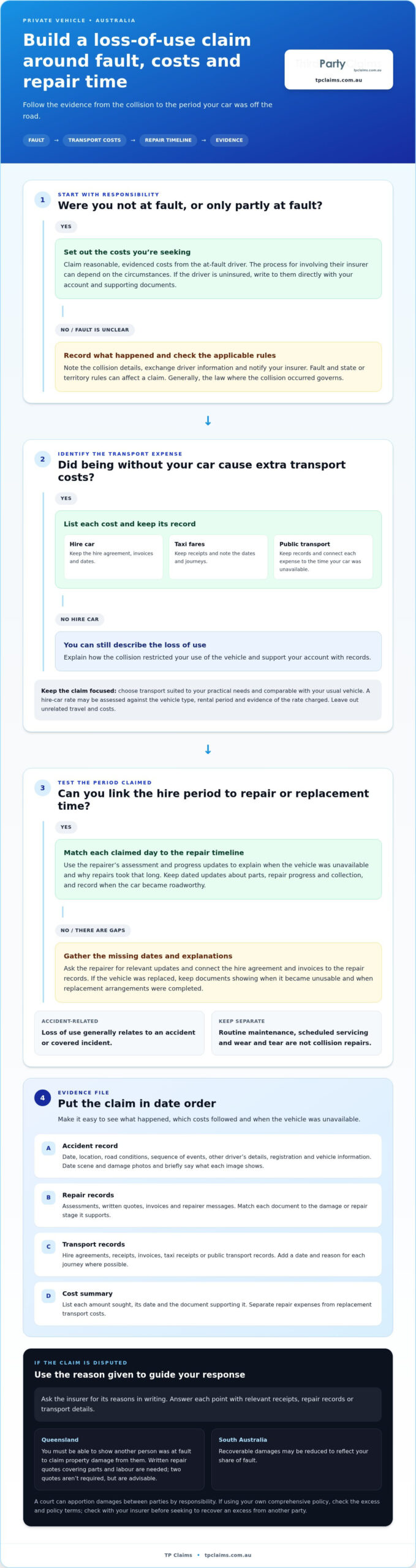
Evidence and information needed to lodge a claim
Organise your documents in date order before lodging a claim. To claim loss of use for a private vehicle after a collision, build a file showing what happened, which costs followed and when the vehicle became unavailable.
- Write an accident record. Note the date, location, road conditions and sequence of events while the details are clear. Include the other driver’s name, contact details, registration and vehicle information. Label scene and damage photographs with dates, and briefly explain what each image shows.
- Collect repair records. Save assessments, written quotes, invoices and messages from the repairer. Match each document to the relevant damage or repair stage. For example, a dated update explaining a repair delay can help show why your car remained unavailable during that period.
- Keep transport evidence together. File hire agreements, receipts and invoices, along with taxi receipts or public transport records. Add the date and reason for each journey where possible. A simple schedule can link each expense to the time your vehicle was off the road.
- Prepare a cost summary. List each amount sought, its date and the document that supports it. Separate repair expenses from replacement transport costs. If you didn’t hire a car, record the alternative transport you used and explain how the accident affected your usual travel arrangements.
- Preserve communications. Keep emails, letters and notes of calls with the other driver or an insurance company. Record who you spoke with, when and what they said about fault, repairs or costs. This timeline helps you address disagreements with specific details.
- Review before lodging. Check that names, registration details, dates and totals match across your documents. For how to claim loss of use for a private vehicle after a collision, make sure each transport expense connects to the period your car was unavailable. Explain any missing receipt and include evidence that supports your account.
Writing a loss-of-use compensation letter
Use a clear, factual letter to explain what happened, what you’re claiming and how your documents support it. Keep a copy of the letter and every attachment for your records.
- Address the right recipient. If you’re claiming directly from an uninsured driver, address the letter to that driver using their correct name and contact details. If an insurer is handling the matter, use the claim contact and reference number in its correspondence. If you’re seeking compensation, ask the other driver or their insurer how to submit your claim.
- Describe the accident briefly. Include the date, location, vehicles involved and a concise account of how the collision occurred. State why you believe the other driver was responsible, and refer to any photographs, witness details or other evidence supporting your account. Keep disputed details factual and avoid accusatory language.
- Set out the loss-of-use claim. Explain when your car became unavailable and how long it remained off the road. List each claimed transport expense separately, with its date and amount. For example, identify hire-car costs separately from taxi or public transport expenses, and link each item to the period your vehicle was unusable.
- State the amount sought. Add the supported expenses and show how you calculated the total. Attach receipts, invoices and repair updates, then label each document so the recipient can match it to a listed cost. Leave out unrelated expenses and costs already reimbursed through car insurance.
- Request a clear response. Ask the recipient to accept or explain any disputed item in writing. A Queensland letter of demand for vehicle repairs should describe the accident, state that you hold the other driver responsible and seek payment based on the lowest repair quote. A Queensland demand may set a 14-day period before legal action.
- Keep the exchange organised. Save the sent letter, delivery record and any reply. If the insurer rejects part of your claim, compare its reasons with your evidence, then respond point by point. A calm, documented exchange makes disagreements about the circumstances or claimed costs easier to address.
If a claim dispute is difficult to manage, get help with insurance negotiations.
TP Claims: Third Party Property Damage Claims
TP Claims manages third-party property damage claims and insurance negotiations when you’re pursuing vehicle-related costs after a collision. If the at-fault driver is uninsured, TP Claims can manage the claims process. Accident replacement vehicles may help meet your transport needs while your car is unavailable, subject to conditions.
Consider contacting TP Claims if you’re unsure how to organise your evidence, communicate with an insurer or progress a third-party property damage claim. The team manages claims on a “No Win, No Fee” basis where applicable, helping reduce the administration involved while you focus on your recovery and day-to-day commitments.
Contact TP Claims to discuss your motor vehicle accident claim.
Take the next step towards resolving your claim
Managing repairs, transport and calls about an accident can make it difficult to focus on your next steps. If you’re deciding how to claim loss of use for a private vehicle after a collision, identify what you need next: a clear response to your claim and a practical way to address any disagreement.
TP Claims can assist with Third Party Property Damage Claims and Insurance Negotiation Services. If the at-fault driver is uninsured, its Claims Management for Uninsured Drivers can help you manage the claims process. The right support can take some of the administrative burden off your shoulders while you consider your next steps.
Contact TP Claims for help discussing your vehicle damage claim. Take the next step when you’re ready, and move forward with a clearer plan.
Frequently Asked Questions
How is the duration of loss of use compensation determined?
The period generally follows the time reasonably needed to repair or replace your vehicle, supported by the repair timeline. A repairer’s assessment, progress updates and the date your vehicle was ready to collect can help explain the period claimed. If the car is written off, provide records showing when it became unusable and how long replacement arrangements took.
What is loss of use in car insurance?
Loss of use describes being unable to use your vehicle after accident damage makes it unavailable. Depending on your policy, cover may include a hire or replacement vehicle, but terms and limits vary. Check the wording for eligibility, approved hire arrangements and the covered period. Routine servicing and wear and tear are different from accident-related unavailability.
Will I get a hire car?
You may have access to a hire car through your own comprehensive policy if it includes that benefit, or you may seek reasonable replacement-transport costs from the responsible driver. Check your policy’s conditions and approval requirements before booking. Keep the hire agreement and invoices, and choose a vehicle suited to your needs while yours is unavailable.
What does loss of use mean for a private vehicle after a collision in Australia?
Loss of use refers to losing access to your private car after collision damage makes it unavailable. A claim may include reasonable transport expenses connected to that loss, such as hire-car charges or other travel costs. Keep records of replacement transport used while repairs are underway, and separate collision-related expenses from ordinary travel.
Can I claim loss of use if the collision was not my fault in Australia?
You may seek compensation from the responsible driver if you weren’t at fault and can support your claim and costs. If you were partly at fault, the amount recoverable may be reduced to reflect your share of responsibility. Keep evidence linking the collision, your vehicle’s unavailability and the transport expenses claimed.
Who pays loss-of-use compensation after a car accident in Australia: the at-fault driver or insurer?
The at-fault driver is the party you seek compensation from. Their insurer may become involved after the driver lodges a valid claim, but you can’t lodge a claim directly on another driver’s insurance policy. If the driver is uninsured, you can pursue the claim directly against them and provide documents supporting your losses and expenses.