
Can you recover income lost while your rideshare vehicle is off the road after a crash that wasn’t your fault? A rideshare driver not at fault accident vehicle downtime claim is about more than repair costs. You need to explain how the damage interrupted your work and support the loss with relevant records.
Lost income and replacement-vehicle costs aren’t automatic parts of a claim. The circumstances and evidence matter. This guide explains the difference between vehicle damage, work downtime and using a replacement vehicle, and what platform, earnings and repair records can help show the impact on your rideshare work.
You’ll also find practical steps to keep your records organised while your vehicle is being repaired. TP Claims manages third-party property damage claims and insurer negotiations on a no-win-no-fee basis, helping reduce paperwork and back-and-forth while you focus on getting mobile and returning to work.
Key Takeaways
- Vehicle downtime is the period your damaged car can’t reasonably be used for rideshare work. It is not necessarily the whole time until repairs are complete.
- Build a timeline covering the accident, the vehicle’s condition, the repair period and the interruption to your work. Evidence helps explain your circumstances but doesn’t guarantee a claim will be accepted.
- Compare using an accident replacement vehicle with documenting lost work time. Check the rideshare platform’s current requirements before using a replacement vehicle for work.
- Keep platform activity, earnings, repair updates and communications together so you can explain when work stopped and when your vehicle returned to service.
- A rideshare driver not at fault accident vehicle downtime claim involves different considerations from vehicle repair costs. Third-party property damage claims management can help reduce the administrative load.
Rideshare vehicle downtime after a not-at-fault accident: what does it mean?
If you rely on your car for rideshare work, an accident can affect both your transport and your ability to earn. Vehicle downtime is the period your damaged vehicle can’t reasonably be used for that work. It may include time spent waiting for an assessment, arranging repairs or having the work completed.
Work disruption is separate from damage to the vehicle itself. A property damage claim concerns matters such as repairing the car, while personal injury matters follow a separate pathway. Rideshare drivers are part of the broader gig worker economy, but that label alone doesn’t determine what losses may be claimed after a crash. A rideshare driver not at fault accident vehicle downtime claim needs to connect the collision to the vehicle being off the road and the resulting interruption to work.
How a damaged rideshare vehicle can interrupt work
Your car may be unavailable while a repairer assesses the damage, arranges parts or schedules the work. Even after repairs begin, it may not be ready to return to rideshare use until the work is complete. Record key dates as they happen: the accident, the assessment, the repair drop-off and the date the vehicle was ready to use again.
Not every damaged car is unusable. Limited cosmetic damage may leave a vehicle operable, while damage affecting safety or essential functions may prevent you from driving it. The vehicle’s condition, repairer information and relevant rideshare platform requirements can help explain why you did or didn’t work during a particular period. Describe what was damaged and how it affected the car’s use rather than assuming that every day of repair time equals lost work.
Vehicle downtime is not the same as a guaranteed income claim
Downtime or lost earnings aren’t automatically accepted as claim items. The outcome may depend on how fault is established, the circumstances of the crash, the available evidence and applicable rules. Requirements can differ between Australian states and territories, so don’t assume one general rule applies everywhere.
Keep vehicle repair costs, time off the road and any claimed income impact separate in your records. Note whether the car was unsafe to drive, waiting for an assessment or undergoing repairs, and keep records that support those dates. A clear timeline helps explain the interruption, but it doesn’t guarantee that a lost income claim will be accepted. The next step is to gather evidence of the timeline and its effect on your rideshare work.
What evidence can support a rideshare vehicle downtime claim?
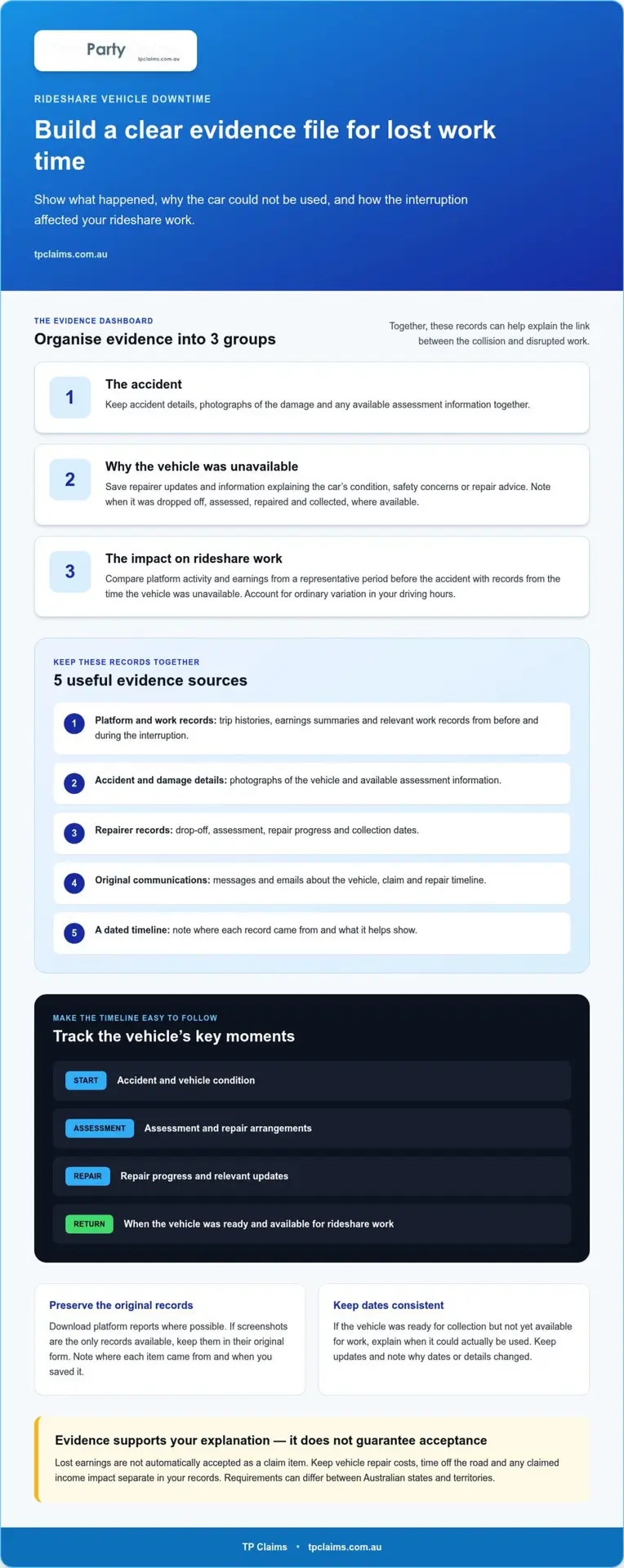
A useful claim file explains what happened, why the vehicle couldn’t be used and how that affected your rideshare work. Records won’t guarantee acceptance, but they can support your timeline and make your circumstances easier to explain. Organise evidence into three groups: the accident, the vehicle’s unavailability and the impact on work.
Show your usual rideshare work pattern
Save platform trip histories and earnings summaries from a representative period before the accident, along with records covering the time your vehicle was unavailable. Comparing activity across those periods can help show how the disruption affected your work. Use your usual pattern rather than your best week or projected maximum earnings, and note ordinary variation in the hours you drive.
Preserve original digital files where possible. Download platform reports instead of relying only on screenshots. If screenshots are the only records available, keep them in their original form. Note where each item came from and when you saved it. Bank statements or tax records may provide context for earnings, but make sure any figures you use relate to your rideshare work and the relevant period.
Link the collision to the time off the road
Keep accident details and damage photographs with repair assessments and updates. Record the dates the vehicle was dropped off, assessed, repaired and collected, where available. If you didn’t drive because of safety concerns or repair advice, retain the information explaining why. Save messages and emails with the repairer, insurer and other party in their original form.
For a rideshare driver not at fault accident vehicle downtime claim, consistent dates matter. If a record says the vehicle was ready for collection on a particular date, explain when it was actually available for work. If dates or details change, keep the update and note the reason.
Evidence checklist:
- Platform trip histories, earnings summaries and relevant work records from before and during the interruption.
- Accident details, photographs of vehicle damage and available assessment information.
- Repairer records showing drop-off, assessment, repair progress and collection dates.
- Messages and emails about the vehicle, claim and repair timeline, kept in their original form.
- A simple dated timeline noting where each record came from and what it helps show.
Organising these records can make the next steps easier. TP Claims manages third-party property damage claims and insurer communications, helping reduce the administrative load while you focus on getting back to work. Read more about third-party property damage claim management.
Replacement vehicle or downtime claim: which option fits your rideshare situation?
If your car is being repaired, you may be weighing two practical options: use another vehicle to keep working, or document the time your own vehicle was unavailable. They address different parts of the problem. A replacement vehicle may reduce disruption, while downtime records help explain an interruption to work. Neither option guarantees that related costs or lost income will be accepted in a claim.
Use this comparison to identify what each approach involves:
| Option | Potential benefit | Points to consider |
|---|---|---|
| Replacement vehicle | May let you continue working while your car is being repaired. | Separate conditions may apply. Check current rideshare platform terms and vehicle eligibility before using it for rideshare work. |
| Downtime documentation | Helps show when your vehicle was unavailable and how work was affected. | Keep records of repair dates and actual work patterns. Documentation doesn’t establish that a loss will be accepted. |
| Considering both | Can help explain how you managed the interruption and any remaining time off work. | Record which vehicle you used, when you worked and when you couldn’t. Don’t assume both options or their costs will be approved or recoverable. |
When a replacement vehicle may help keep work moving
Another vehicle during repairs may help you maintain your work routine instead of waiting for your car to return. A replacement vehicle is not automatically suitable for rideshare, however. Platform acceptance and vehicle eligibility depend on current platform terms, so check those requirements before relying on the vehicle for work. A replacement vehicle also may not match your original car or restore your usual income.
For broader information about vehicle options after a crash, see this not-at-fault replacement car guide.
When documenting downtime may be more relevant
If you don’t use a replacement vehicle, keep a clear record of the repair period and your actual work interruption. If you switch to another vehicle, note when you began using it and whether you resumed rideshare work. This helps distinguish the time your damaged car was unavailable from the time you personally couldn’t work. The circumstances of the claim still need to be considered.
For a rideshare driver not at fault accident vehicle downtime claim, your records can help show which option you used and how it affected your work. Keep expectations measured: a replacement vehicle or associated costs aren’t automatically approved or recoverable, and downtime evidence doesn’t replace an assessment of the claim circumstances. Keep relevant receipts, platform records and repair updates together so the timeline is easy to follow.
What should you do while your rideshare vehicle is being repaired?
While repairs are underway, consistent record-keeping can make the timeline easier to explain. There’s no single reporting deadline that applies to every situation, so keep records promptly and follow any relevant instructions you receive. Describe the vehicle’s condition, repair progress and changes to your rideshare work accurately.
Build a clear accident-to-repair timeline
- Record the damage. Keep photographs and a brief note of what you observed after the accident. Save the date and any details that identify when and where the images were taken.
- Log the key dates. Note when the vehicle was assessed and dropped off, when repair work began and when you collected it. If a date changes, add the update rather than replacing the original entry.
- Keep repair information together. Save assessments, repairer updates and messages about the vehicle in one organised digital folder or file. Label items with the date and source so you can find them later.
- Track work changes as they happen. Note when you stopped rideshare work, whether you used another vehicle and when you resumed. Keep your notes factual and consistent with your platform records.
- Confirm the return to service. Record when the repaired vehicle was collected and when you were able to use it for rideshare work again. If those dates differ, note why.
This sequence connects the collision, repair period and work interruption without treating every day in the repair process as automatically lost work. If your circumstances change, such as using another vehicle for some shifts, record that too. Clear updates help explain each part of the repair period.
Keep the claim moving without taking on every task alone
Managing documents, updates and insurer communications can become another job while you’re trying to get back on the road. A claims manager can handle administration for a third-party property damage claim and negotiate with the insurer, helping reduce that load. TP Claims manages these claims on a no-win-no-fee basis. No claim outcome or recovery of downtime losses is guaranteed.
For an overview of the wider process, the third-party property damage claim guide explains how a property damage claim may be managed. TP Claims can help with the paperwork and insurer negotiation for your vehicle damage claim through third-party claim help.
How TP Claims can help with a rideshare driver’s not-at-fault vehicle claim
After a crash, you may be handling repairs, rideshare records and insurer communications at the same time. TP Claims manages third-party motor vehicle property damage claims and insurer negotiations, helping take some of that administration off your plate. The focus is your vehicle damage claim and its related records, so you can spend less time managing correspondence and more time on your next steps.
What claims management can take off your plate
TP Claims manages the property damage claims process on your behalf and handles insurer negotiations as part of that process. This can help keep vehicle damage information and claim communications organised, particularly when you’re also explaining how the repair period affected your rideshare work.
Claims management doesn’t mean every item you raise will be accepted. Repair costs, replacement-vehicle costs and downtime-related losses can depend on the circumstances and supporting evidence. A clear timeline of the accident, vehicle condition, repairs and work impact gives the claim context, but can’t guarantee a particular result. The service operates on a no-win-no-fee basis.
TP Claims provides accident replacement vehicles while a property damage claim is being processed. Access to another vehicle may help you stay mobile during repairs. However, having a replacement vehicle doesn’t establish that it can be used for rideshare work or that related costs will be recovered. Check current platform requirements and keep replacement-vehicle details separate from records about the damaged car and any work interruption.
A simple next step when work has been disrupted
Before discussing your situation, bring together records showing what happened and how it affected your work. An organised set of documents can make it easier to explain the sequence without relying on memory alone. Include:
- Accident details and photographs of the vehicle damage.
- Repair assessments, updates and dates showing when the vehicle was unavailable and returned.
- Rideshare trip histories or earnings summaries that reflect your actual work pattern.
- Relevant messages and emails with the repairer, insurer or other parties.
- Notes about whether you stopped driving or used another vehicle during repairs.
TP Claims can manage the third-party property damage claim and insurer negotiation while you focus on mobility and work. Each claim is assessed on its own facts, and recovery of downtime-related losses isn’t assured. To discuss support with your vehicle damage claim, get help with your vehicle damage claim.
Take the next step towards getting back to work
A vehicle accident can leave you balancing repair updates with the pressure of keeping work moving. Start with the records you have and a clear account of how the damage affected your rideshare work. The details of a rideshare driver not at fault accident vehicle downtime claim depend on its circumstances and evidence, so keep expectations realistic as you consider your options.
TP Claims manages third-party property damage claims and insurer negotiations on a no-win-no-fee basis. TP Claims also provides accident replacement vehicles while a property damage claim is being processed. Neither a claim outcome nor recovery of downtime-related losses is guaranteed, but claims management can reduce the administration involved.
Get help managing your vehicle damage claim with TP Claims, and focus on getting back to work one step at a time.
Frequently Asked Questions
Can I claim lost income if I was not at fault in a rideshare accident?
You may be able to include a supported work-related loss in a third-party property damage claim, but recovery isn’t automatic. A rideshare driver not at fault accident vehicle downtime claim may depend on how fault is assessed, the circumstances and evidence of your actual loss. Keep platform earnings and trip records, and account for work expenses you didn’t incur while off the road. Applicable rules can differ across Australia.
Is rideshare vehicle downtime automatically covered after a crash?
No. Vehicle downtime and lost earnings aren’t automatically accepted simply because another driver was at fault or your car needed repairs. Explain why the vehicle couldn’t be used, how long it was unavailable and what work was affected. Keep records supporting each part of that account, and don’t assume the entire repair period will be treated as compensable downtime.
What records can show my usual rideshare earnings before an accident?
Use platform earnings summaries and trip histories covering a representative period before the crash, then compare them with activity during the disruption. Bank statements and tax records can provide supporting context, while a diary or roster may help show your usual driving hours. Keep the date ranges clear and explain unusual gaps, such as holidays or a change in work hours, rather than presenting an atypical peak period as your normal income.
Can I use a replacement vehicle for rideshare work while mine is repaired?
Possibly, but don’t assume a replacement vehicle is automatically eligible for rideshare use. Check the platform’s current vehicle and driver requirements, and update any required vehicle details before accepting trips. Keep a record of when you received and returned the vehicle, and of any rideshare work completed in it. A replacement vehicle may help you stay mobile, but platform approval and recovery of related costs aren’t guaranteed.
Can I claim downtime if my car is still driveable after the accident?
Possibly, but if the vehicle is driveable, the reason for stopping work may need to be explained clearly. Consider whether the damage affected safe operation, platform requirements or the vehicle’s practical suitability for rideshare use. Keep any repair assessment or other record explaining the limitation, and distinguish days you chose not to drive from days the car was unavailable. The claim depends on its circumstances and supporting evidence, not just the presence of damage.
How long can a rideshare driver claim vehicle downtime for?
There’s no single period that applies to every claim. The relevant timeframe may depend on when the vehicle became unavailable, the repair process and evidence explaining any delays. Keep dated updates from the repairer and note when the vehicle was collected and ready for work. If parts, assessment or scheduling extend the repair period, retain information showing what caused the delay rather than relying on an estimate alone.
What if the other driver or their insurer disputes who caused the accident?
If fault is disputed, keep your account factual and preserve relevant material, such as photographs, witness contact details, exchanged information and any available incident records. Avoid guessing about details you didn’t see, and keep copies of correspondence. A dispute may affect how the property damage claim progresses, so a clear, consistent timeline can help explain your position. TP Claims manages third-party property damage claims and insurer negotiations, but outcomes depend on the circumstances.