
After a crash, it can be hard to know what to do first. Damage to your car, conflicting accounts and questions from insurers can leave you unsure where to start. If you’re searching “how to claim against at fault driver”, clear evidence and the right claim pathway matter more than assumptions.
You may be weighing up whether to contact your own insurer or the other driver’s, what records to keep, and what happens if fault is disputed or the driver has no insurance. You don’t need to work it all out at once. This guide sets out practical steps to organise the details and understand your options for pursuing vehicle property damage in Australia.
Learn what to record after a collision, how claims through your own insurer differ from third-party claims, and what you can do if the other driver is uninsured or an insurer questions your account. We’ll also cover when claims-management support or independent advice may be useful, so you can choose a clear next step.
Key Takeaways
- Start with safety, then record the crash details and preserve evidence that may help explain what happened.
- Learn how to claim against at fault driver by comparing a claim through your own insurer with a third-party property damage claim.
- If fault is disputed or the other driver is uninsured, organise your photos, witness details and incident records before deciding what to do next.
- Keep repair documents and insurer correspondence together, and log each conversation, request and agreed action.
- If insurer communications become difficult to manage, explore whether third-party property damage claims support may suit your situation.
How to claim against an at-fault driver: start with safety and evidence
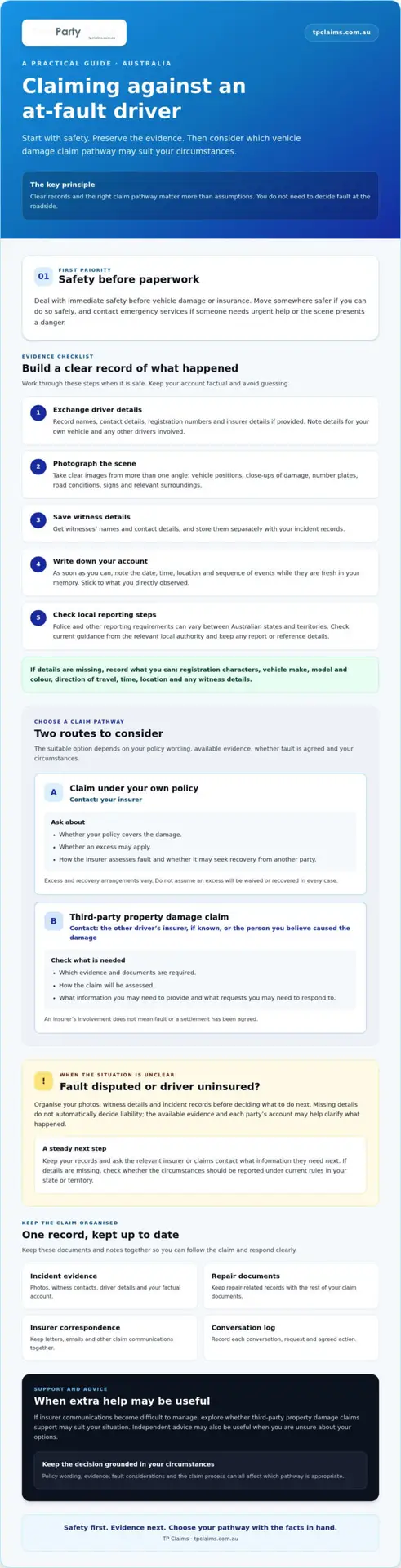
A collision can leave you shaken, so deal with immediate safety before vehicle damage or insurance. Once everyone is safe, work through the next steps in order. You don’t need to decide fault at the roadside. Focus on collecting accurate information that may help explain what happened.
- First, check for immediate danger. Move to a safer place if you can do so safely, and contact emergency services if anyone needs urgent help or the scene presents a danger.
- Next, exchange details. Note the other driver’s name, contact details, registration number and insurer details, if provided. Record your own details and those of any other drivers involved.
- Then, document the scene. When it’s safe, photograph vehicle positions, damage, number plates, road conditions, signs and relevant surroundings. Get witnesses’ names and contact details.
- After leaving the scene, write down what happened. Record the date, time, location and sequence of events while they’re fresh in your memory. Keep your account factual and avoid guessing.
- Finally, check reporting and claim steps. Police and other reporting requirements can vary between Australian states and territories. Check current guidance from the relevant local authority, then keep any report or reference details with your claim records.
Start by preserving the essentials: details of the scene, vehicle damage, drivers and witnesses, plus your factual account of the collision.
What details should you collect at the scene?
Capture what you can without putting yourself or anyone else at risk. Take clear photos from more than one angle, including close-ups of damage and wider shots showing where the vehicles were. Save witness contacts separately. Don’t argue about blame or admit fault. If you’re asked what happened, stick to what you directly observed.
What should you do if the other driver leaves or details are missing?
Write down any registration characters you saw, the vehicle’s make, model and colour, its direction of travel, and the sequence of events. Note the time and exact location, and preserve any photos or witness details. Check whether the circumstances should be reported to police or another authority under current rules in your state or territory.
Missing details don’t automatically decide who is liable. The available evidence and each party’s account may still help clarify what happened. Fault can involve assessing responsibility and the circumstances of the collision, often discussed through the legal concept of negligence. That general explanation does not determine the outcome of your claim. If you’re unsure how to claim against at fault driver when key information is missing, keep your records and ask the relevant insurer or claims contact what information they need next.
Choose a claim pathway: your insurer or the at-fault driver’s insurer
Once you’ve recorded the incident, consider how to pursue the vehicle damage claim. You may be able to claim under your own policy, or make a third-party property damage claim through the other driver’s insurer or the person you believe was responsible. The suitable option depends on your policy wording, the evidence available, whether fault is agreed and your circumstances.
| Pathway | Who you contact | What to check | Possible considerations |
|---|---|---|---|
| Claim under your own policy | Your insurer | Whether your policy covers the damage, any excess that may apply and how the insurer assesses fault. | Your insurer can explain its process and whether it may seek recovery from another party. Excess and recovery arrangements vary. |
| Third-party property damage claim | The other driver’s insurer, if known, or the person you believe caused the damage. | What evidence and documents are required, and how the claim will be assessed. | You may need to provide information and respond to requests. The insurer’s involvement doesn’t mean fault or a settlement is agreed. |
Can you claim through your own insurer when you were not at fault?
Possibly, depending on your policy and the circumstances. Read the relevant policy wording and ask your insurer whether the damage is covered, whether an excess could apply, how it assesses fault and whether it may pursue recovery. Don’t assume an excess will be waived or recovered in every case. Ask what applies to your claim and request a clear explanation of the next steps.
What does a third-party property damage claim involve?
If you have the other driver’s insurer details, you can contact the insurer about a property damage claim. Otherwise, ask the driver where to direct your claim. You’ll generally need to explain what happened and provide relevant evidence. The insurer may request more information. Its role is different from your own insurer’s, so keep copies of what you send and record the responses. Lodging a claim doesn’t confirm liability or guarantee an agreed outcome.
If you’re weighing up how to claim against at fault driver, compare the practical steps and possible implications of each route before proceeding. Check your policy and ask your insurer about your specific cover rather than relying on general explanations. For a closer look at the third-party route, read this third-party property damage claim guide.
If insurer communications are difficult to manage, you can also explore third-party property damage claims support for help with claims management and insurance negotiations.
What if fault is disputed or the driver is uninsured?
A driver saying they weren’t responsible, or an insurer questioning your account, doesn’t mean your version has been rejected. Equally, believing the other driver caused the collision doesn’t mean liability has been agreed. Focus on setting out the sequence of events as clearly as possible, supported by reliable records.
How should you respond when the other side disputes fault?
Write a dated timeline while the details are fresh. Separate what you directly saw or heard from what you assume happened. For example, note which direction each vehicle was travelling and where you first noticed the other vehicle. Don’t guess at speed or intention if you couldn’t know.
Photos, witness details and incident records may help clarify how the collision occurred. If an insurer asks for documents, send relevant copies and record what you provided, when you sent it and any response. Keep communications calm, factual and consistent. Don’t change details to fill gaps in your memory.
If the accounts conflict, ask the insurer what information it relied on and what further material it needs to review your account. A complex or unresolved dispute may be a reason to seek qualified independent advice. An insurer’s view is not the same as a court decision, and this general information can’t determine responsibility in your individual case.
Can you claim if the at-fault driver has no insurance?
A driver being uninsured doesn’t by itself prove who caused the collision or guarantee that you’ll recover the cost of the damage. Keep any identifying details you have, along with your evidence and communication records. The options available can depend on the circumstances, the evidence and the parties involved, so ask what routes may apply to your situation.
If you’re figuring out how to claim against at fault driver without an insurer on the other side, don’t assume one process fits every case. You can read this focused guide to uninsured driver recovery options for more on that scenario. Claims-management support may also help with communications about a third-party property damage claim involving an uninsured driver, depending on the details of your case.
Move the claim forward with organised documents and careful follow-up
A clear record can save time when an insurer or another party asks for details again. Keep claim material together, note what’s outstanding and follow up in writing when you need an update. Repair assessments and settlement discussions may require further information, so be prepared for questions or requests as the claim progresses. There’s no single timeframe that applies to every claim.
Which documents can help support a property damage claim?
Set up a digital folder or paper file and keep copies of relevant documents, such as:
- Incident records: your notes about the date, location and events, plus witness details and any relevant report or reference number.
- Photos: images of the vehicles and damage, along with any scene photographs you have.
- Repair documents: repair assessments, quotes, invoices and receipts relevant to the vehicle damage.
- Claim communications: insurer or other-party letters, emails, claim references and notes from calls.
- Policy information: relevant policy documents and correspondence if you’re contacting your own insurer.
Provide accurate information when requested and keep a copy of each item you submit. Note when and how you sent it. A repair estimate can help describe the damage, but it isn’t a guaranteed final decision or settlement. The same applies to an insurer’s initial response.
How can you keep claim communications on track?
Use one simple log to record each contact. Include the date, the person or organisation you spoke with, what they requested or said, what you sent and any agreed next action. Set a reminder to follow up on unanswered questions. If a request or decision is unclear, ask for an explanation in writing so you can review it and respond accurately.
A dated claim record keeps requests, responses and next steps clear, especially when several conversations are involved.
If you’re waiting for a response, don’t assume silence means the claim has been accepted or declined. Check what information remains outstanding and ask when it would be appropriate to follow up. For a general overview of what may affect progress, see this third-party claim timeframe guide.
If managing the correspondence is becoming difficult, you can ask about third-party property damage claims management and insurance negotiation support.
Know when to get help with an at-fault driver claim
Managing a vehicle damage claim can take time, especially if the damage is disputed, the other driver is uninsured or insurer communications are hard to keep on top of. A claims-management service may help organise claim steps, gather relevant information and handle communications during negotiations. This support may be useful if you have limited time or aren’t sure how to respond to a request or decision.
What can a property damage claims manager help with?
TP Claims manages third-party motor vehicle property damage claims and insurance negotiations. Its support also includes claims involving uninsured drivers and truck collision disputes. A claims manager may help identify what information is needed for the property damage claim and manage related communications. The service is not legal representation, insurance advice or support for personal injury claims, and TP Claims does not represent at-fault drivers.
Claims management can help reduce the administrative load, but it can’t guarantee that another party will accept responsibility or that you’ll recover a particular amount. If you’re deciding how to claim against at fault driver, check that the support on offer matches your situation and relates to vehicle property damage.
What should you check before asking for help?
Before proceeding, ask clear questions and make sure you understand the answers. For example:
- What parts of the property damage claim and insurer communication does the service cover?
- What documents or information will you need to provide?
- What fees, terms or eligibility conditions apply?
- If the service is described as no-win-no-fee, what are the current terms and conditions, and what circumstances could affect eligibility?
- If an accident replacement vehicle may be relevant, what availability and eligibility requirements apply?
Confirm any no-win-no-fee terms and replacement-vehicle eligibility directly before relying on them. Read the service terms carefully, ask about anything unclear and consider whether you need independent advice for questions outside the service’s scope. The right support depends on your claim and circumstances.
If you’d like to discuss whether claims management may suit your vehicle damage situation, take a practical next step and talk to TP Claims about your property damage claim.
Take your next step with a clearer plan
After a collision, you don’t need to solve everything at once. Start by keeping a clear record of what happened, then compare the claim pathways available to you and keep your documents organised. If fault is disputed or the other driver is uninsured, evidence may help clarify the situation, but it doesn’t guarantee a particular outcome.
Knowing how to claim against at fault driver means understanding your options and getting support when the process becomes difficult to manage. TP Claims manages third-party motor vehicle property damage claims and insurer negotiations, including support for uninsured-driver claims. Eligibility and terms depend on your circumstances, so confirm these directly. The service doesn’t handle personal injury claims or represent at-fault drivers.
If you’d like to discuss your vehicle damage claim, talk to TP Claims about your property damage claim. Contact TP Claims to discuss whether its claims-management support may suit your situation.
Frequently Asked Questions
How do I claim against an at-fault driver in Australia?
To claim against an at-fault driver, first make sure everyone is safe and record the collision details. Collect the other driver’s contact and registration details, photograph the damage and scene when safe, and save witness contacts. Then consider whether to contact your insurer under your policy or make a third-party property damage claim. Keep incident records and claim correspondence together. The suitable pathway depends on your policy, the evidence and your circumstances.
Can I claim directly from the at-fault driver’s insurer?
You can contact the other driver’s insurer to ask about lodging a third-party property damage claim if you have their insurer details. Be ready to provide a clear account of the collision and supporting material, such as photographs, repair documents and witness information. The insurer may ask for more details or assess fault before responding. Contacting the insurer doesn’t mean it has accepted liability or agreed to pay your claim.
Should I claim through my insurer or the other driver’s insurer?
There’s no single route that suits every claim. Contacting your insurer may be an option if your policy covers the damage, but check the wording and ask about any excess, how fault is assessed and whether recovery may be pursued. A third-party claim involves contacting the other driver’s insurer or the person you believe was responsible. Compare the steps and possible implications, and ask your insurer what applies to your policy and circumstances.
What evidence do I need to claim for car damage?
Gather photographs of the vehicles, damage and relevant surroundings, plus the date, location and your factual account of events. Keep the other driver’s details, witness contacts and any incident or police reference information. Repair assessments, quotes, invoices and relevant receipts may also support your property damage claim. If you contact an insurer, retain your policy details, claim reference and all correspondence, and note when you submit each document.
Can I claim against a driver who has no insurance?
You may still have options to pursue a vehicle property damage claim, but the available steps depend on the evidence and circumstances. A driver being uninsured doesn’t establish responsibility or guarantee payment. Keep any identifying details and records of the collision, then ask what options may apply to your situation. TP Claims manages third-party property damage claims, including support for uninsured-driver claims. Confirm eligibility and applicable terms directly.
What happens if the other driver disputes who caused the accident?
A dispute means the parties or insurer haven’t agreed on responsibility. Create a dated timeline and separate what you directly observed from assumptions. Photos, witness details and incident records may help clarify the sequence. Provide relevant material when requested, keep copies and communicate factually. If the accounts conflict or the issue becomes complex, consider seeking qualified independent advice. Don’t assume that one party’s version alone settles the question of fault.
Is there a time limit for making a car damage claim in Australia?
There isn’t one simple nationwide deadline to rely on for every vehicle damage claim. Time limits can depend on the type of claim and the state or territory, and legal proceedings may have separate deadlines. Check current guidance from the relevant state or territory authority and seek independent legal advice if you’re unsure. It’s sensible to contact the relevant insurer or claims contact promptly rather than waiting until a deadline may be close.