
What if a truck collision leaves you facing a major repair bill while your business loses income by the day? Truck collision property damage disputes can involve more than an insurance claim. They may include disagreements about repair assessments, vehicle downtime and the evidence needed to support a claim.
If you’re not at fault, you may expect the other party’s insurer to address the damage. But heavy vehicle repairs can be costly, and negotiations can add pressure when you need to keep your business moving. You don’t have to manage every call, form and disagreement alone.
This guide explains how to approach a property damage claim, what evidence may help support it and how specialist insurance negotiation can ease the administrative load. It also covers accident replacement vehicles and practical ways to document disruption while your truck is off the road. TP Claims manages third-party property damage claims nationally on a no-win-no-fee basis, handling the insurance follow-up so you can focus on your business.
Key Takeaways
- Understand how truck collision property damage disputes differ from personal injury matters, so you can keep your claim focused on property damage.
- Learn why liability can be harder to establish when a collision involves a roundabout or multi-lane intersection.
- Recognise when delays or arguments about shared fault may affect a commercial vehicle claim, and know what to ask.
- Find out which records, such as dashcam footage, logbooks and witness statements, may help explain what happened.
- See how a detailed repair assessment from a heavy vehicle specialist can help you evaluate a settlement offer.
What Defines Truck Collision Property Damage Disputes?
A truck collision property damage dispute arises when people or businesses disagree about responsibility for damage, the repairs needed or the amount to be paid. Damage might involve a truck, another vehicle, cargo or other property. Collisions can include rear-end impacts, sideswipes and other types of road incidents. The What Defines a Truck Collision overview explains common collision types and contributing factors.
Property damage claims are separate from personal injury matters. Third-party property damage (TPPD) concerns damage to someone else’s vehicle or property, while personal injury relates to harm to a person. This guide focuses on property damage only.
Heavy vehicles can be costly and technically complex to assess. Damage to a truck’s structure, specialist components or connected equipment may call for a detailed inspection and repair expertise. In some cases, an insurer may consider the vehicle a total loss if repairing it isn’t economically viable. Check that the assessment describes the damage and proposed work, rather than relying on a quick visual estimate.
When Does a Claim Become a Dispute?
A claim can become disputed if the truck driver or company denies responsibility, or if the insurer challenges the repair scope or quote. These are often described as liability and quantum disputes. Liability concerns who caused the collision, while quantum concerns the amount claimed. An insurer may ask for more information, dispute parts of a repair assessment or delay a decision while it investigates. Keep a record of requests and responses, and ask for the reasons behind any disagreement in writing.
If the truck owner is uninsured, there may be no insurer handling the property damage claim. You may need to pursue the responsible party directly, which can make communication and recovery more difficult. Claims management for uninsured drivers can provide support with this process.
The High Stakes of Heavy Vehicle Damage
Truck repairs don’t always follow the same process as repairs to a passenger vehicle. Specialist parts, suitable repair facilities and skilled labour can affect an assessment, while time off the road may disrupt a business. A repair quote should describe the damage and proposed work clearly. If the vehicle may be uneconomical to repair, the basis for that assessment matters too.
The Heavy Vehicle National Law includes Chain of Responsibility duties for parties in the transport supply chain. These duties focus on shared responsibility for safety. They may help explain the circumstances around a collision, but they don’t automatically determine who pays for property damage. That’s why truck collision property damage disputes need careful attention to the evidence, vehicle damage and specific incident details, rather than assumptions based on a standard car bingle.
Why Heavy Vehicle Property Damage Claims Often Lead to Disputes
A truck collision can leave more than a damaged vehicle behind. A transport business may face repair work, lost use of its truck and pressure to keep jobs moving. For an owner-operator or small fleet, one vehicle off the road can disrupt scheduled work and income. That commercial impact helps explain why truck collision property damage disputes can involve more negotiation than a typical car claim.
Responsibility may also be contested. At a roundabout, drivers may disagree about who entered first, changed lanes or had room to proceed. At a multi-lane intersection, the position of each vehicle and the timing of movements may be hard to establish from memory alone. A driver’s concern about their professional record may add pressure, but it doesn’t establish fault. The circumstances and available evidence still need to be assessed.
Insurance arrangements can add another layer. A transport operator may have primary cover, an excess and, in some cases, additional cover above that. These are parts of the operator’s insurance arrangements, not a guarantee that a third-party claimant will be paid. They may affect who handles the claim and how cover is considered, so don’t assume every policy responds in the same way.
The Problem of Demurrage and Commercial Downtime
Demurrage generally refers to charges for keeping equipment or cargo beyond an agreed time. It isn’t automatically the same as a business’s loss from having a truck off the road. If a collision delays deliveries or leaves a vehicle unavailable, keep clear records of the disruption and any related charges. Whether those losses can be recovered depends on the circumstances and evidence.
A replacement vehicle may help a business stay mobile, but a specialised truck may not be interchangeable with an ordinary hire vehicle. Keep records of what the business needed and how the replacement was used. TP Claims provides accident replacement vehicles and manages third-party property damage claims, helping take the insurance follow-up off your plate.
Insurers and the “Lowball” Repair Estimate
A repair estimate can become a sticking point if it proposes different parts or work from a heavy vehicle specialist’s quote. Ask for the differences to be itemised, including how the proposed repairs would address the damage. With an older truck, there may also be disagreement about what “pre-accident condition” means and whether the proposed work restores its previous state without unnecessary upgrades.
An independent assessment can give you a clearer basis for comparing repair scopes and questioning unsupported reductions. Keep the assessment, photographs and quotes together, then ask the insurer to explain any shortfall in writing. If negotiations become difficult, specialist truck collision claims management may help you manage the paperwork and insurer discussions.
Navigating Insurance Company Tactics in Commercial Vehicle Claims
A delay, a disputed repair item or a request for more documents can put pressure on you to accept an offer just to get your truck back on the road. These steps may be part of an insurer’s assessment rather than deliberate tactics. Either way, keep a record of what’s requested, provide relevant information and ask for a clear explanation when the insurer disputes part of your claim. That paper trail can help you stay organised during truck collision property damage disputes.
Liability can also become a point of pressure. An insurer might interpret lane positioning, signalling or the sequence of movements differently and argue that you share some responsibility. Don’t accept a percentage of blame just because it’s proposed. Ask what evidence supports the position, then respond with relevant material such as photos, dashcam footage or witness details if you have them.
Requests for documents can slow progress, especially if it’s unclear how they relate to the collision or claimed damage. Ask the insurer to explain why each item is needed. Keep copies of what you send and note when you sent it. Before signing a “full and final settlement”, check exactly which claims it covers. It may resolve more than the repair bill, so make sure you understand its effect and have considered outstanding damage or other claimed losses.
Why Specialist Insurance Negotiation Can Help
Truck repairs involve vehicle-specific assessments and operational pressures that a general motor claim process may not always account for. A clear Letter of Demand can set out what happened, the damage claimed, the supporting documents and the response sought. Keep it factual and attach relevant evidence. If an insurer won’t provide its client’s claim number, ask for another reference, the insurer’s contact details and written confirmation of the claim’s status.
Specialist insurance negotiation can take insurer follow-up and paperwork off your hands. TP Claims manages third-party property damage claims and specialises in complex truck collision disputes.
Protecting Your Position After a Collision
If you’re not at fault, you can put forward evidence of the damage and seek an appropriate repair outcome. Ask for the proposed repair method and parts to be explained, particularly if you’re concerned about safety or the vehicle’s condition after repair. The outcome depends on the facts and claim assessment, so don’t assume a particular repair or payment is automatic.
You may also be able to pursue the driver or registered owner responsible for the damage, depending on the circumstances. If you need transport while your vehicle is being repaired, eligibility for a replacement vehicle depends on your situation. Read more about a replacement car after an accident when you’re not at fault.
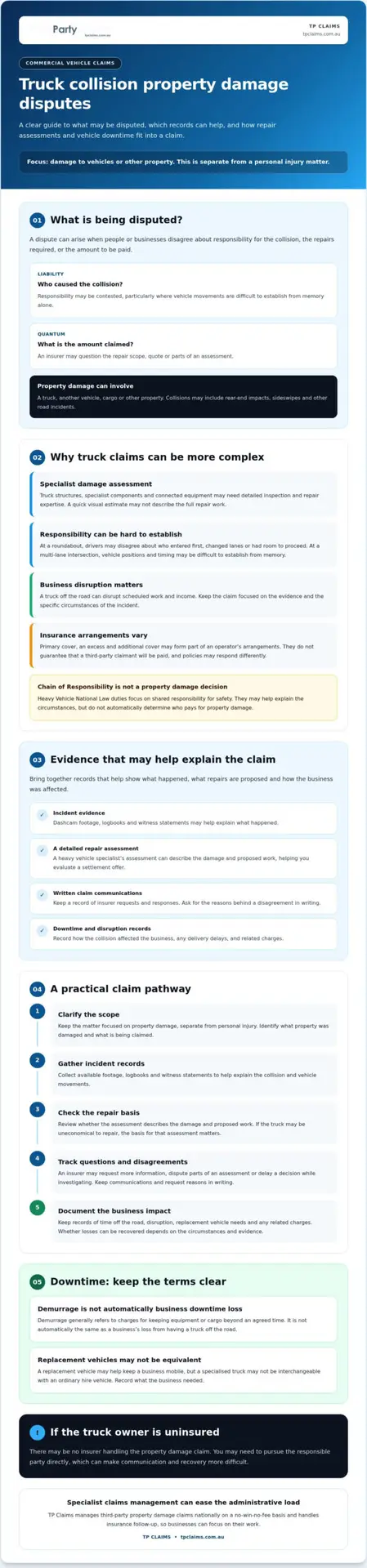
Your Step-by-Step Guide to Resolving a Truck Collision Dispute
A clear evidence trail can make it easier to explain what happened, support your repair claim and respond when an insurer challenges the details. Take these steps as soon as practicable, while keeping safety and any police directions in mind.
1. Record What You Can at the Scene
If it’s safe, note the truck and trailer registration numbers, the transport company’s name and the other driver’s details. Photograph the vehicles’ positions, damage, road layout, signs and relevant markings before vehicles are moved, if circumstances allow. These images can help show the scene, but they don’t establish fault on their own. Ask witnesses for their contact details and note whether police attended. A police report may record incident information, but don’t assume it determines liability.
2. Preserve Evidence and Get a Detailed Repair Assessment
Save dashcam footage promptly so it isn’t overwritten. Keep relevant logbook or work records, witness details, photographs and correspondence together. Ask a heavy vehicle specialist for an itemised repair assessment that describes the damage, proposed work and parts. If you disagree with an insurer’s assessment, use it to compare the repair scope and ask specific questions.
3. Organise Your Claim Documents
Keep quotes, towing receipts and any rental or replacement vehicle invoices in one secure folder. Add dates and a short note explaining what each document relates to. A simple timeline of calls, emails, requests and responses can help you spot gaps and follow up without reconstructing events from memory.
If you’d like help managing a third-party property damage claim, read this guide to third-party property damage claim help.
4. Make a Clear Written Demand and Follow Up
Write to the at-fault party and, if known, their insurer. Set out the incident, why you consider the recipient responsible, the damage claimed and the documents supporting your position. Ask for a response by a reasonable date, but understand that your requested timeframe isn’t automatically a binding deadline. If the insurer disputes part of the claim, ask for its reasons in writing and respond to the specific points with relevant evidence.
If your complaint concerns an insurer’s handling of a matter, ask about its internal dispute resolution process and whether you’re eligible to use it. The Australian Financial Complaints Authority may be an option for eligible complaints if internal resolution doesn’t resolve the issue. These steps can help bring order to truck collision property damage disputes, but you don’t have to manage every insurer conversation alone. Get support with a truck collision claim from a specialist claims manager.
How Specialist Claims Management Protects Your Business Interests
A truck claim can keep pulling you away from running your business. You may be fielding insurer calls, chasing repair updates and working out whether costs such as towing or storage belong in your claim. Specialist claims management can take on much of that insurance follow-up, help organise the paperwork and keep you informed about progress.
TP Claims manages third-party property damage claims nationally on a no-win-no-fee basis and specialises in insurance negotiation for complex truck claims. Before proceeding, make sure you understand the agreed terms, including what fees or other costs may apply and in what circumstances. No-win-no-fee doesn’t guarantee a particular claim outcome.
A claims manager can also help you identify and document costs connected with the incident. Keep towing and storage invoices, repair assessments and records of business disruption together. Whether a particular cost can be included or recovered depends on the circumstances and supporting evidence, so don’t assume every expense will be paid automatically.
Staying Mobile While the Dispute Is Resolved
A truck off the road can affect jobs, deliveries and income. An accident replacement vehicle may help keep your business moving while repairs or claim discussions continue. TP Claims provides accident replacement vehicles. Confirm availability, suitability and any costs or claim conditions for your circumstances. Clear records of why a replacement vehicle was needed and how it was used can help support the related claim.
Mobility can ease operational pressure, but it doesn’t determine who was at fault or guarantee a settlement. Keep your focus on evidence, repair needs and clear communication with the claims manager.
A More Personal, Specialist Approach
Truck collision property damage disputes can involve technical repair information, business records and persistent insurer follow-up. A specialist focused on property damage and truck claims can help keep those moving parts organised, rather than leaving you to manage each exchange alone. Transport rules may form part of the broader circumstances, but check any legal obligations with an appropriate source or professional.
TP Claims’ no-win-no-fee model means it manages eligible property damage claims under agreed terms. It reflects a commitment to pursue your claim, not a promise of a particular result. You remain the decision-maker, and TP Claims can explain progress and next steps. That support can give you more room to focus on repairs and getting the business back into its usual rhythm.
Get Your Truck Claim Moving Forward
Truck collision property damage disputes can put repair decisions, business continuity and insurer negotiations on your plate at once. A well-organised evidence trail helps you explain your claim, while specialist support can take the follow-up and paperwork off your hands.
TP Claims manages third-party property damage claims nationally and specialises in truck collision disputes and insurance negotiation. Its no-win-no-fee model lets you discuss claims management under agreed terms. It doesn’t guarantee a particular outcome, so make sure you understand the conditions that apply to your claim.
You don’t have to face the insurance follow-up alone. Contact TP Claims about managing your truck collision dispute, with specialist property damage claims support available nationally across Australia. You can then focus on your claim, your vehicle and your business.
Frequently Asked Questions
What is the most common cause of truck collision property damage disputes?
There isn’t one confirmed most common cause. Disputes often centre on who was responsible or how much repairs should cost. A collision at a multi-lane intersection, for example, may lead to different accounts of vehicle movements, while a disagreement about the repair scope can create a separate issue. Keep available photos, dashcam footage, witness details and itemised repair assessments to help support your account.
Can I claim for loss of income if my commercial truck is damaged?
You may be able to claim some business losses, but recovery depends on the circumstances, evidence and how the loss is assessed. Keep clear records linking the truck’s downtime to missed work or income, such as work schedules, cancelled jobs and relevant business records. Also document towing, storage and replacement vehicle costs. Don’t assume every expense will be covered. Ask for the reasons in writing if any items are disputed or excluded.
What happens if the truck driver was an independent contractor?
An independent contractor arrangement doesn’t automatically decide who is responsible for property damage. The driver, registered owner, transport business and other parties may have different roles, and responsibility depends on the facts and applicable law. Record the driver’s and truck owner’s details, the company name and any insurer information you receive. If liability is disputed, get help assessing who to direct your claim to rather than relying on the contractor label alone.
Do I need a lawyer for a truck property damage dispute?
You don’t necessarily need a lawyer to make or negotiate a property damage claim. The right support depends on the dispute’s complexity and whether legal issues or court proceedings arise. A claims manager can help organise documents and handle insurer negotiations, but claims management isn’t the same as legal representation. Consider getting independent legal advice if you’re unsure about signing a settlement, accepting shared fault or taking formal legal action.
How long does it typically take to resolve a heavy vehicle claim dispute?
There’s no reliable standard timeframe for resolving every heavy vehicle dispute. The damage assessment, liability disagreements, missing information and negotiation can all affect progress. Under the General Insurance Code of Practice, insurers must acknowledge a claim within 10 business days and generally decide within four months, with extensions for exceptional circumstances. If they have all necessary information, a decision is due within 10 business days. These are insurer decision timeframes, not guaranteed settlement dates.
What if the at-fault truck driver has no insurance?
You can still seek compensation for property damage, but without an insurer involved you may need to pursue the responsible person or business directly. Keep evidence of the collision, repair assessments and related expenses, and retain copies of all correspondence. The recovery process can be more challenging, especially if responsibility or payment is disputed. TP Claims manages claims for uninsured drivers on a no-win-no-fee basis, subject to the agreed terms.
Can I choose my own repairer for my truck after an accident?
You may be able to nominate a repairer, but don’t assume the insurer will automatically approve every repairer, quote or repair method. Check the relevant claim arrangements before authorising work, and ask the insurer to confirm its position in writing. An itemised assessment from a heavy vehicle specialist can help explain the required repairs, parts and labour. Keep the quote and any assessment disagreements as part of your claim records.
Will a property damage dispute affect my own insurance premium?
It depends on your policy, the circumstances and whether you make a claim under your own cover. A third-party property damage claim against the responsible party’s insurer is different from claiming under your own policy, but premium decisions are insurer-specific. Check your policy documents and ask your insurer how reporting the collision or making a claim may affect your cover or renewal. Confirm the terms directly rather than assuming an outcome.